
Learning how to hold and use a sea kayaking paddle properly makes a big difference in both comfort and efficiency on the water. Good technique helps you paddle farther with less effort and prevents sore arms or tired shoulders. The key is to let the paddle and your body work together rather than relying only on arm strength.
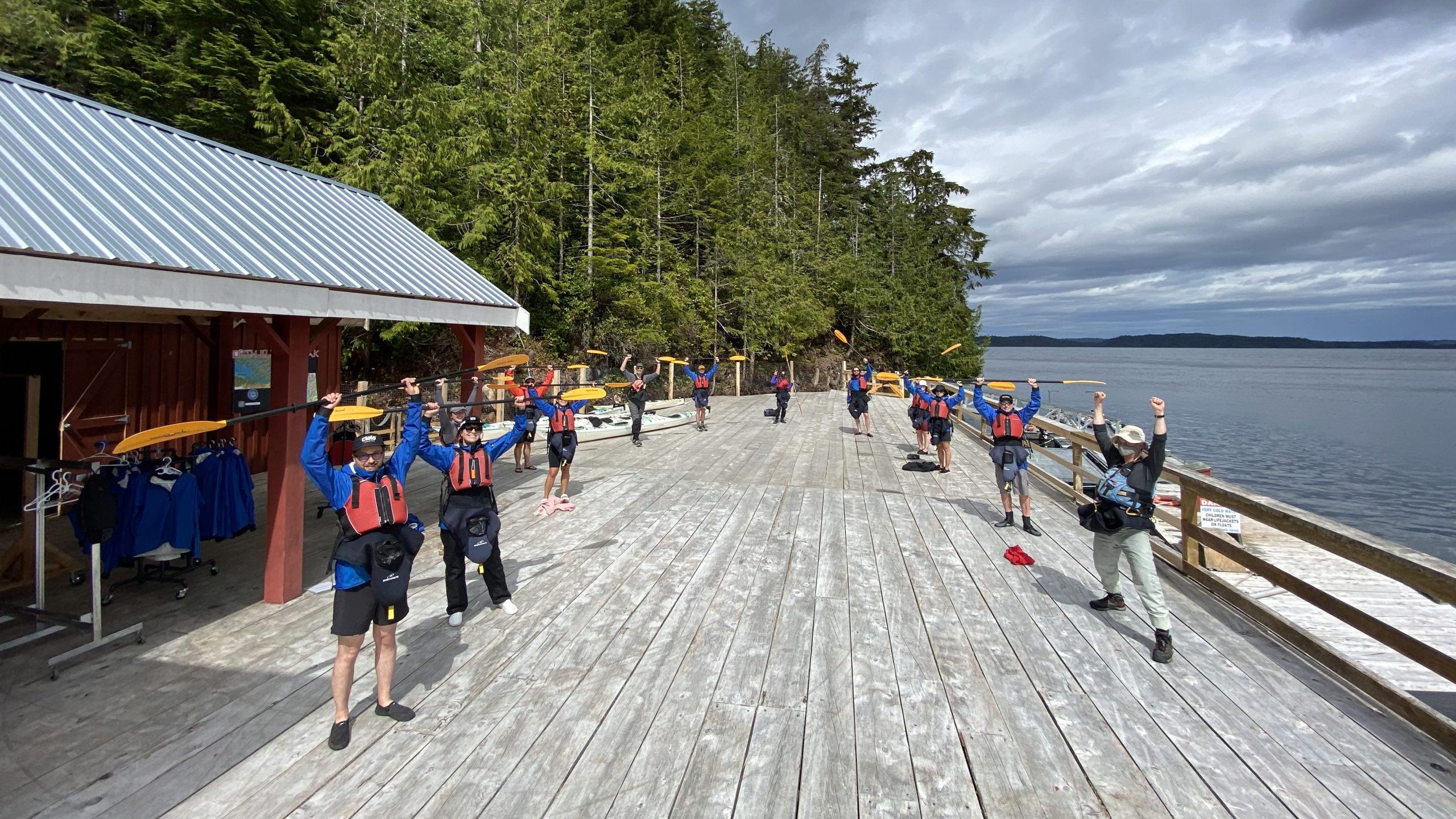
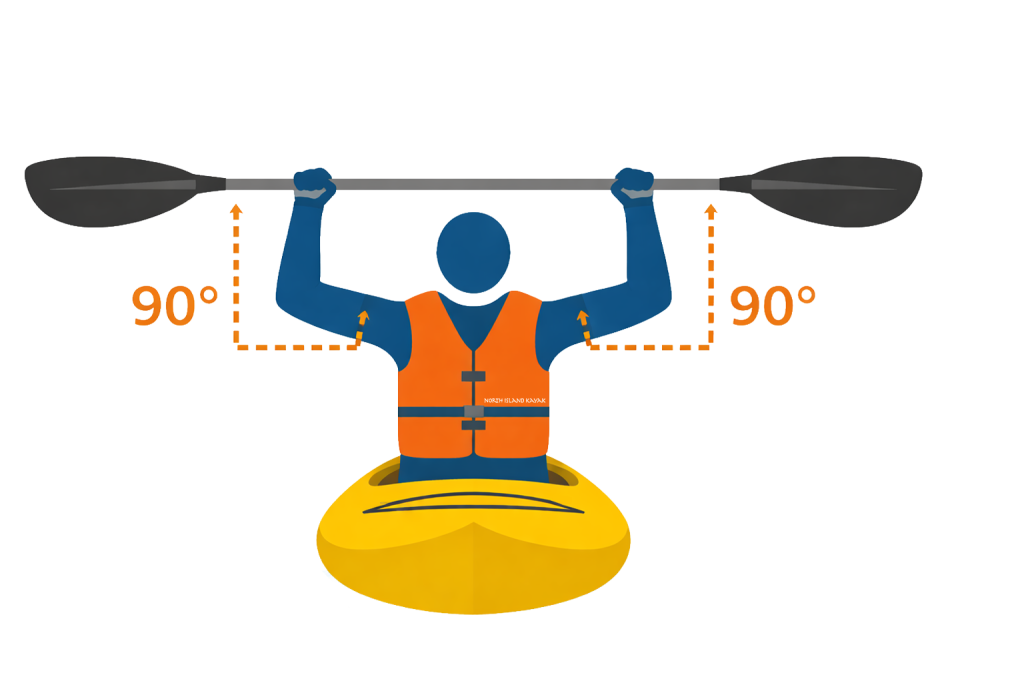
A sea kayak paddle is designed to move smoothly through the water. The blades are shaped to be hydrodynamic, meaning they are built to reduce drag and grab the water efficiently with each stroke. Our grip also plays an important role. Hands should be placed roughly shoulder-width apart on the shaft. When the paddle is held above your head, your elbows should form about a 90-degree angle, which helps position your hands correctly. As shown here:
Hold the paddle firmly but not tightly, keeping your wrists relaxed so the stroke stays smooth and natural. Once you have the proper paddle positioning, kayaking becomes much less about your arms and much more about your core. Many beginners try to pull the paddle through the water using only their arms, which quickly leads to sore shoulders and fatigue. Instead, the power should come from rotating your torso.
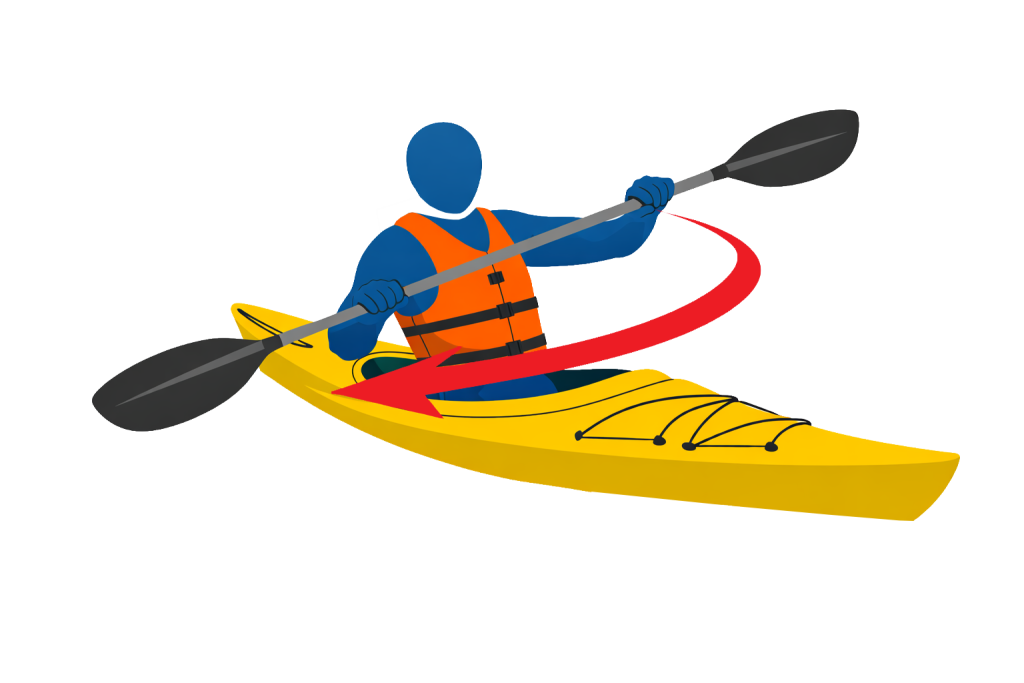
When you plant the paddle blade in the water, rotate your upper body so your shoulders turn with the stroke. Your leading arm stays mostly extended while your opposite arm guides the paddle back. This rotation allows your core muscles to drive the stroke, making paddling smoother, more efficient, and far less tiring over time.
On our tours at North Island Kayak, we use Aqua Bound paddles, which are lightweight and comfortable for long paddles. They also include a small grip section on the shaft that helps guide hand placement and reduces water running down the paddle onto your hands. It is a small detail, but one that makes paddling more comfortable over time.
With the right paddle, proper grip, and good technique, sea kayaking becomes much easier and more enjoyable!


