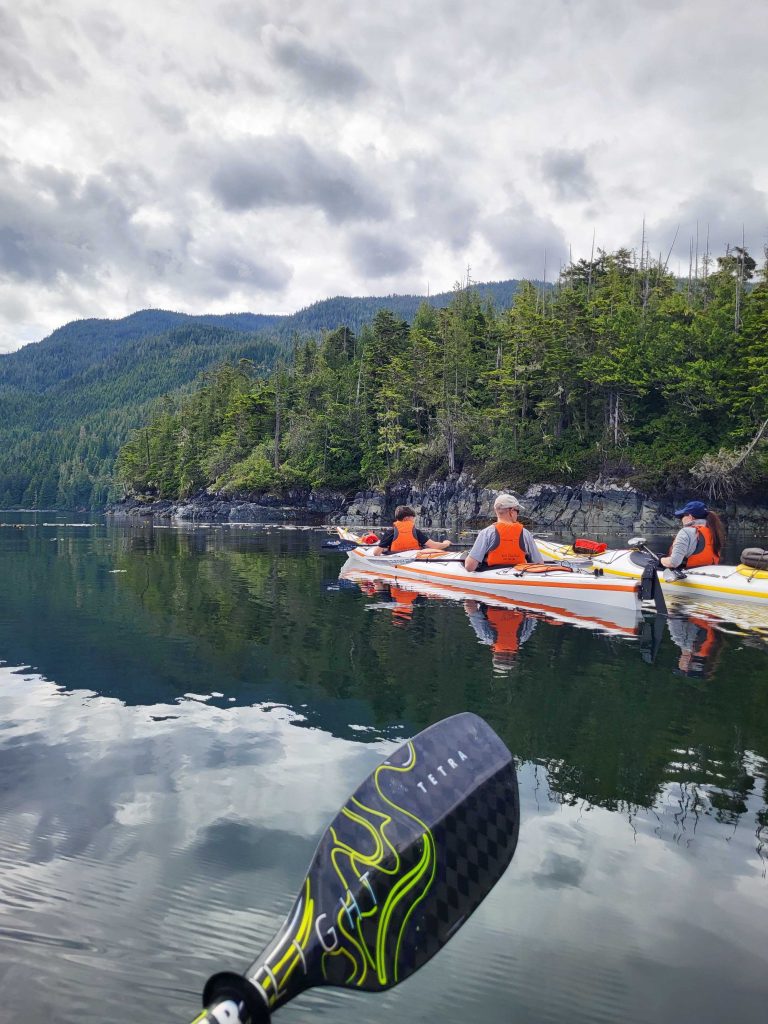
You are halfway through your paddle. The tide is slack, the water is glassy, and a humpback surfaces just beyond the kelp line. You reach for your phone or camera, frame the shot, and then see it—ten percent battery.
When you are travelling off-grid around northern Vancouver Island, there are no outlets tucked behind driftwood logs and no charging stations on remote beaches. So, here is what to bring so you can capture the moment without worrying about your battery bar.
Portable Solar Power Banks
For shorter trips, a compact solar power bank is often all you need. These are lightweight, durable, and designed for outdoor conditions.
The Goal Zero Venture 75 Power Bank is a rugged, weather-resistant option that holds enough charge to top up a phone multiple times or recharge smaller camera batteries. It pairs well with small foldable solar panels if you want to recharge the unit during sunny layovers.
The BLAVOR 20000mAh Solar Charger is a budget-friendly alternative with built-in solar capability. While solar panels on compact units charge slowly, they are excellent for emergency top-ups or maintaining battery life over the course of a day.
These types of power banks fit easily into a dry bag and can be clipped to your kayak deck lines during lunch stops to soak up extra sun.
Portable Power Stations for Multi-Day Trips
If you are heading out for several days and travelling with multiple devices such as a mirrorless camera, drone batteries, headlamps, or satellite communicators, a larger portable power station may be worth the extra space.
The Jackery Explorer 300 is a popular compact station that can recharge phones, cameras, and other small electronics multiple times. It strikes a balance between portability and capacity.
The EcoFlow River 2 Pro offers even more power while remaining manageable for vehicle supported adventures or base camp style trips.
For something smaller but more versatile than a basic USB pack, the Anker SOLIX C200 DC provides higher output and faster charging in a relatively compact design. These units are ideal for longer expeditions where you set up camp and recharge everything at once in the evening while you enjoy dinner and watch the light fade over the strait.
A Few Practical Tips
Cold temperatures drain batteries faster. Keep devices and power banks inside your dry bags and insulated in your tent overnight. Bring extra charging cables and keep them organized in a waterproof pouch.
Airplane mode and low power settings can dramatically extend battery life when you are simply using your phone for photos. Most importantly, remember that while capturing photos is wonderful, some of the best moments are the ones you simply watch!
Packing the right charging gear ensures you are prepared, but it also gives you peace of mind. When you know your batteries are covered, you are free to focus on your experience!