When exploring the waters around Vancouver Island and the Salish Sea, it’s easy to mistake a porpoise for a dolphin, or even another species of porpoise. While they may look similar at first glance, Harbour Porpoises and Dall’s Porpoises are two distinct species, each with unique characteristics, behaviours, and habitats. If you’re lucky enough to spot one during your time on the water, here’s how to tell them apart:
Harbour Porpoise
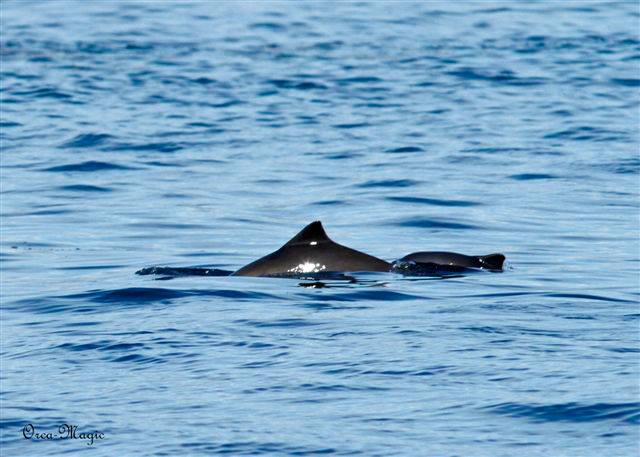
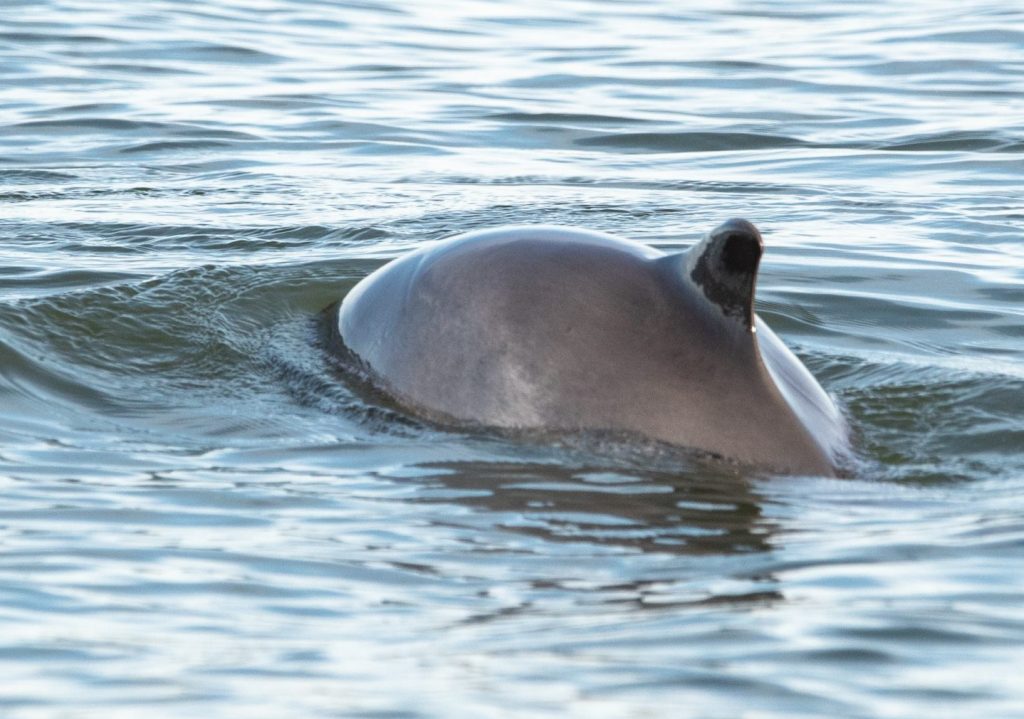
The Harbour Porpoise (Phocoena phocoena) is one of the smallest cetaceans in British Columbia, typically measuring between 1.4 and 1.9 metres (4.5–6 feet) and weighing 45–70 kilograms (100–155 pounds). Their colouring is simple: a dark grey back fades into lighter grey sides and a pale white belly. They have a small, triangular dorsal fin positioned about halfway down their back and a short, rounded beak, or rather, no beak at all, which is one of the defining features of porpoises.
Harbour porpoises are generally shy and elusive. They usually travel alone or in small groups of two to five animals and rarely approach boats. Instead of leaping from the water, they surface quietly with a gentle rolling motion before disappearing beneath the waves. Because of their subtle behaviour, they can be surprisingly difficult to spot despite being relatively common throughout BC.
Dall’s Porpoise
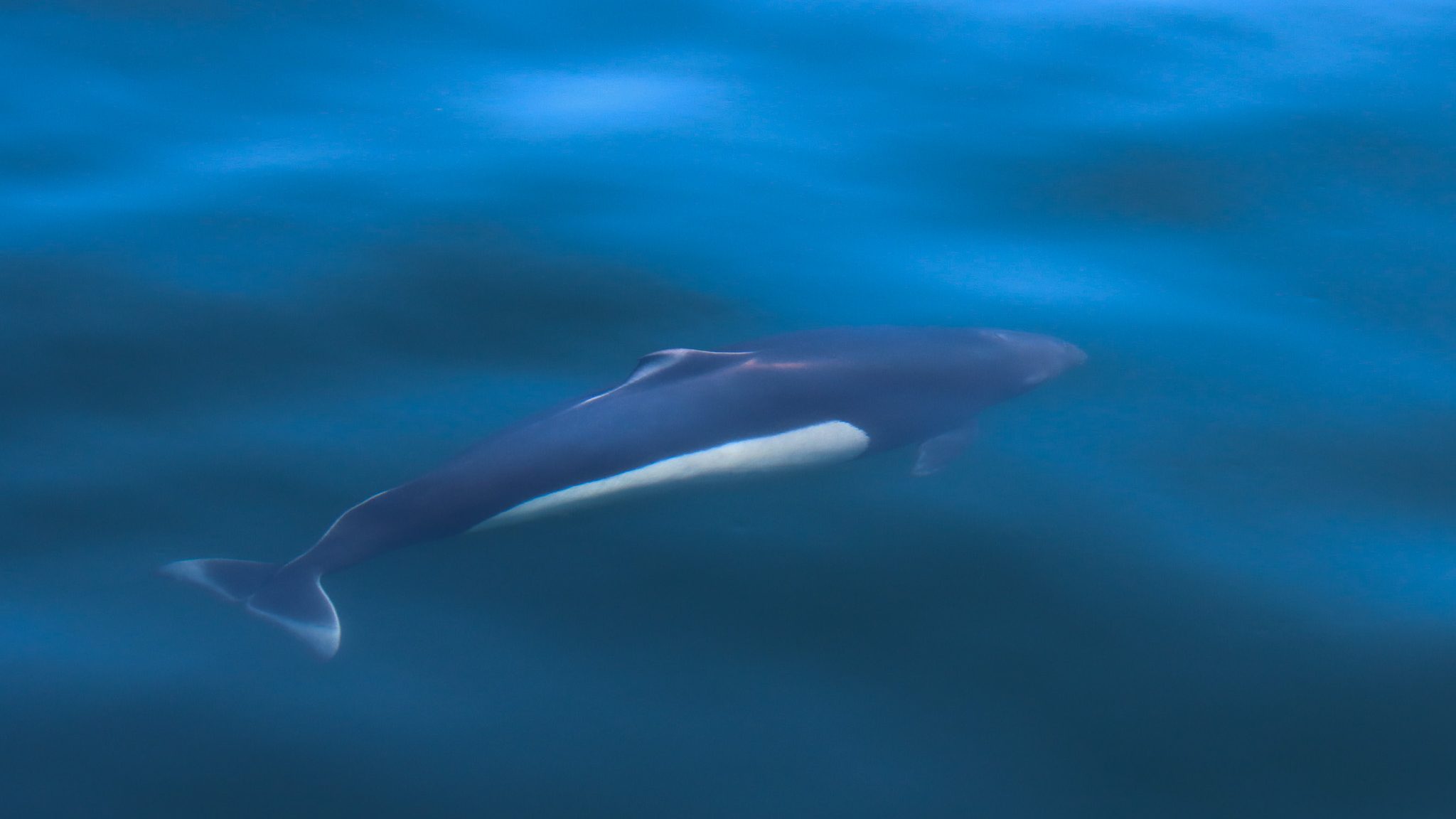
The Dall’s Porpoise (Phocoenoides dalli) couldn’t be more different. Slightly larger than harbour porpoises, they grow up to 2.3 metres (7.5 feet) and can weigh more than 200 kilograms (440 pounds). Their striking black-and-white colour pattern resembles that of an orca, making them one of the most recognizable marine mammals on the Pacific Coast.
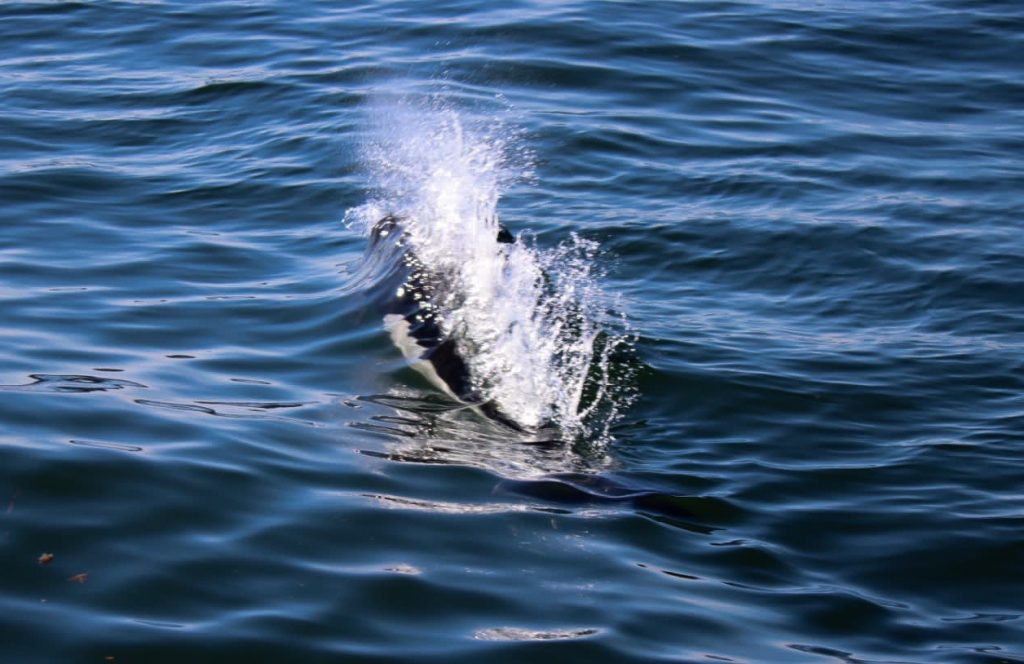
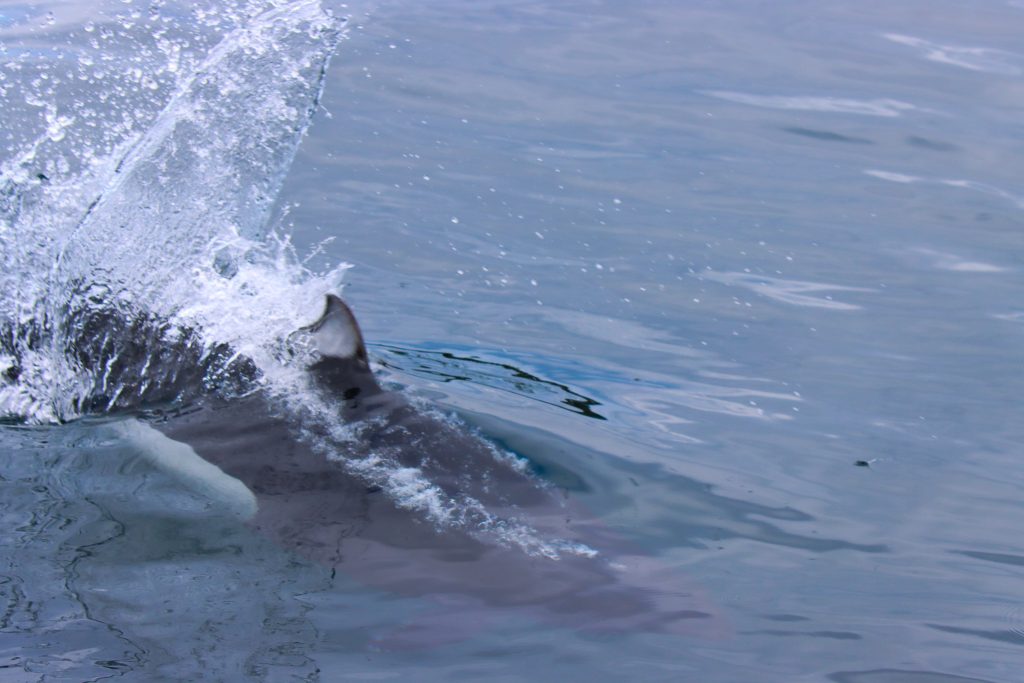
Unlike their quieter cousins, Dall’s porpoises are famous for their speed. They are among the fastest cetaceans in the world, capable of reaching speeds approaching 55 km/h (34 mph). As they race just beneath the surface, they create a distinctive spray called a “rooster tail,” a fan-shaped plume of water that often gives away their presence before the animals themselves are visible. Dall’s porpoises are also much more curious around boats and will occasionally bow ride alongside vessels, delighting passengers with their energetic behaviour.
Habitat
Although both species occur along British Columbia’s coast, they tend to use different habitats.
Harbour porpoises prefer sheltered coastal waters, bays, harbours, and inland channels. They’re frequently seen throughout the Strait of Georgia, Juan de Fuca Strait, Johnstone Strait and the protected waters around Vancouver Island.
Dall’s porpoises, on the other hand, favour deeper offshore waters and areas where strong currents concentrate prey. While they do occasionally travel south, they are more commonly encountered along the outer coast of Vancouver Island, especially here in the north close to Telegraph Cove!


