One of BC’s Greatest Conservation Success Stories
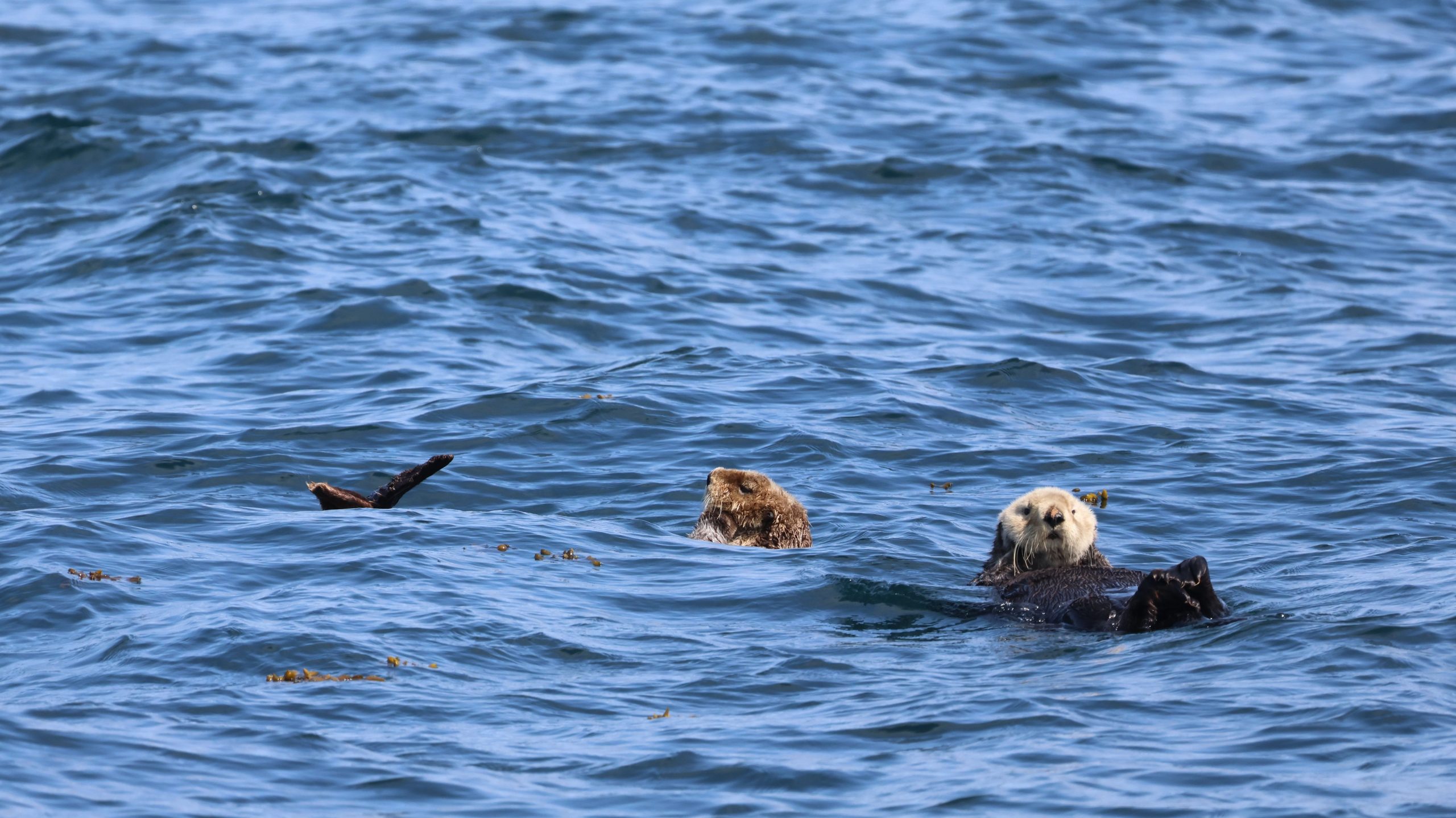
Few wildlife sightings bring as much excitement as spotting a sea otter floating on its back, paws tucked against its chest, as it drifts through a kelp forest!! Around Telegraph Cove, these marine mammals have become an increasingly common sight for kayakers, whale watchers, and wildlife enthusiasts.
For much of the 18th and 19th centuries, sea otters disappeared almost entirely from British Columbia due to the fur trade. By the early 1900s, they had been hunted to local extinction along the BC coast. Their remarkable return began in the late 1960s and early 1970s, when just 89 sea otters were reintroduced to Checleset Bay on Vancouver Island’s west coast.
Since then, the population has made an incredible recovery. Today, British Columbia is home to more than 8,000 sea otters, and their range continues to expand northward and eastward. The waters surrounding northern Vancouver Island, including areas around Telegraph Cove, now support a healthy and growing population.
For visitors exploring Johnstone Strait and the surrounding inlets by kayak, sea otter sightings have become one of the highlights of the experience. They can often be found resting among giant kelp forests, where the kelp acts like a natural anchor, preventing them from drifting away while they sleep or care for their pups. Unlike seals or sea lions, sea otters spend nearly their entire lives in the water, relying on their exceptionally dense fur rather than a layer of blubber to stay warm. In fact, sea otters have the densest fur of any mammal, with up to one million hairs per square inch.
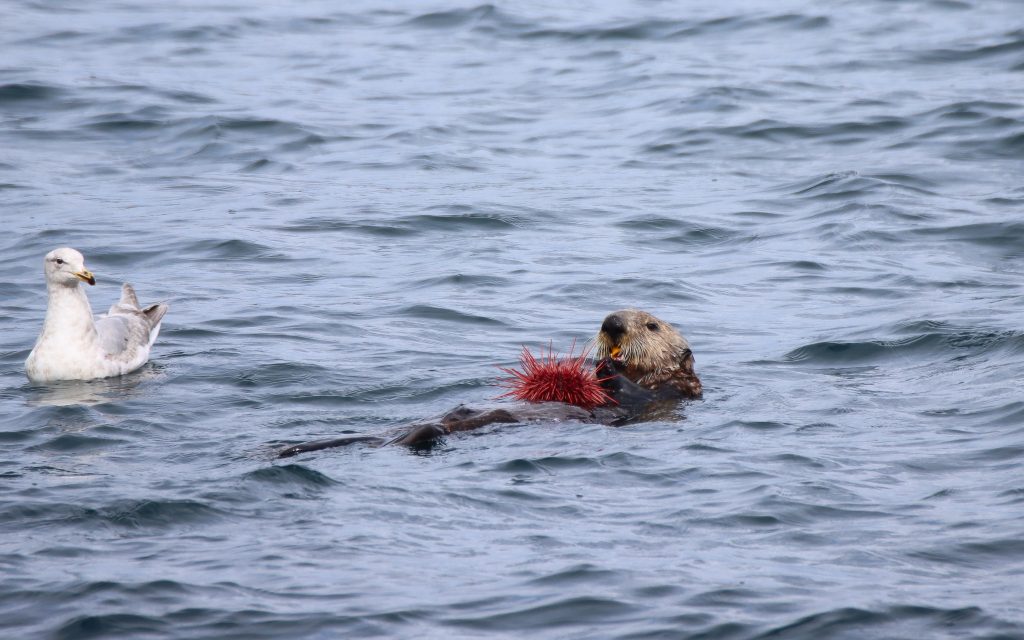
Watching a sea otter feed is equally fascinating. They are one of the few mammals known to use tools, often placing a rock on their chest and smashing open shellfish such as clams, mussels, sea urchins, and crabs while floating on their backs. Their appetite plays an important role in maintaining healthy coastal ecosystems.
Sea otters are considered a keystone species because of the profound impact they have on the marine environment. By feeding on sea urchins, they prevent urchin populations from overgrazing kelp forests. Healthy kelp forests provide shelter and food for countless species of fish, seabirds, invertebrates, and marine mammals while also helping store carbon and buffer coastlines from wave action.
Although sea otters are thriving around Telegraph Cove, they remain a protected species, and it’s important to give them plenty of space. Whether you’re paddling quietly through a sheltered bay or exploring aboard one of our wildlife tours, observing them from a respectful distance allows these remarkable animals to continue their natural behaviours without disturbance.
Seeing a sea otter in the wild is always a memorable experience, but it reminds us of what successful conservation can achieve. Their return to the waters around Vancouver Island is one of British Columbia’s greatest wildlife recovery stories, and every sighting is a celebration of a healthier marine ecosystem.