The Acrobats of the BC Coast
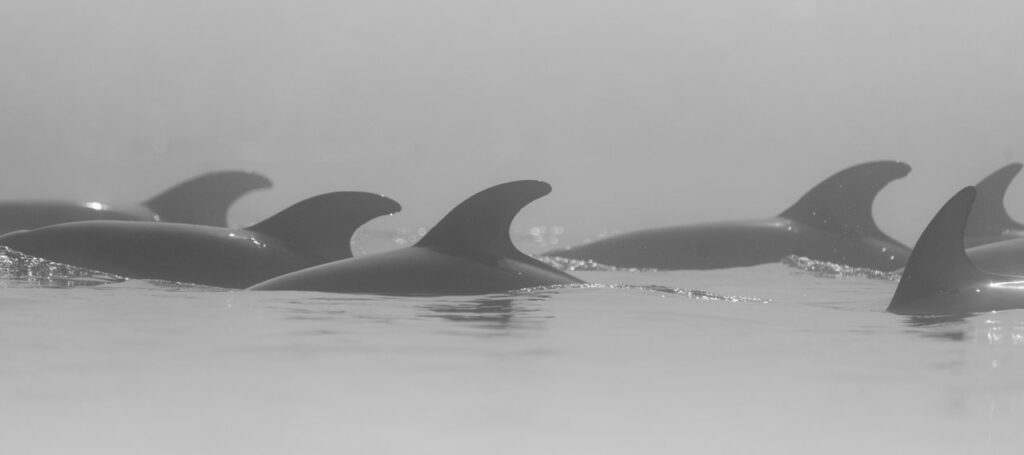
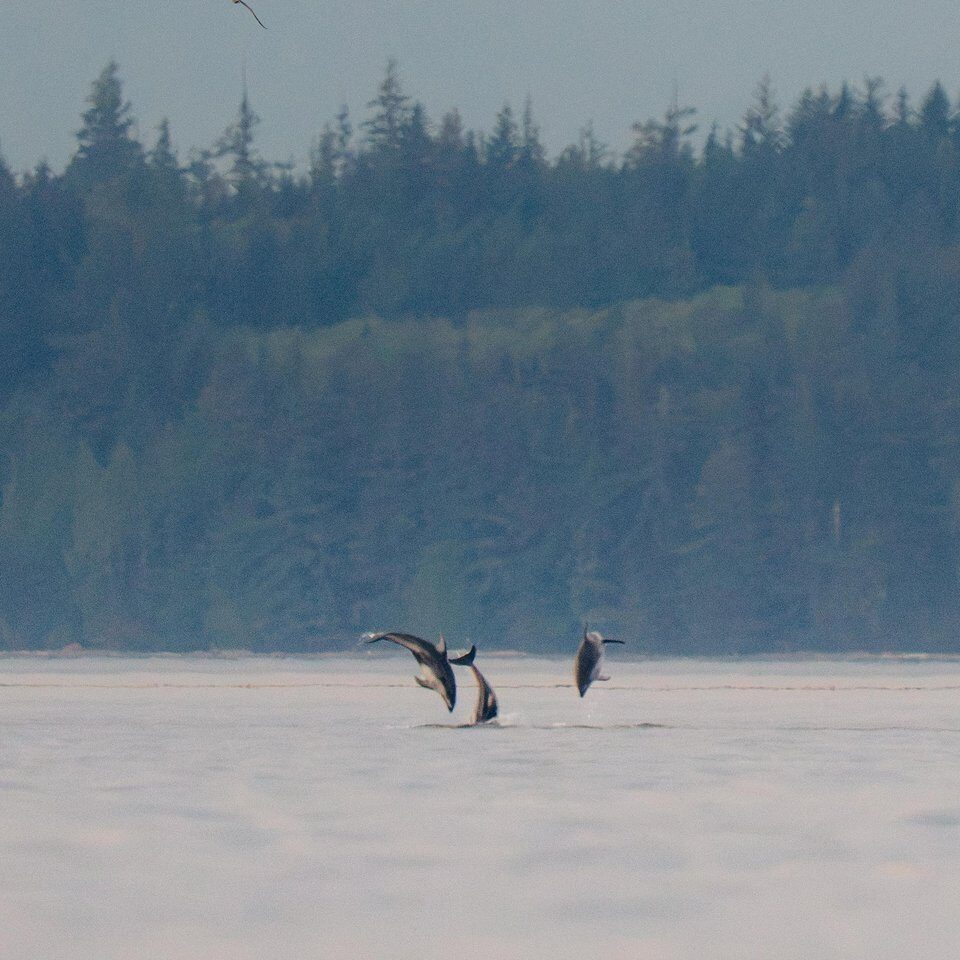
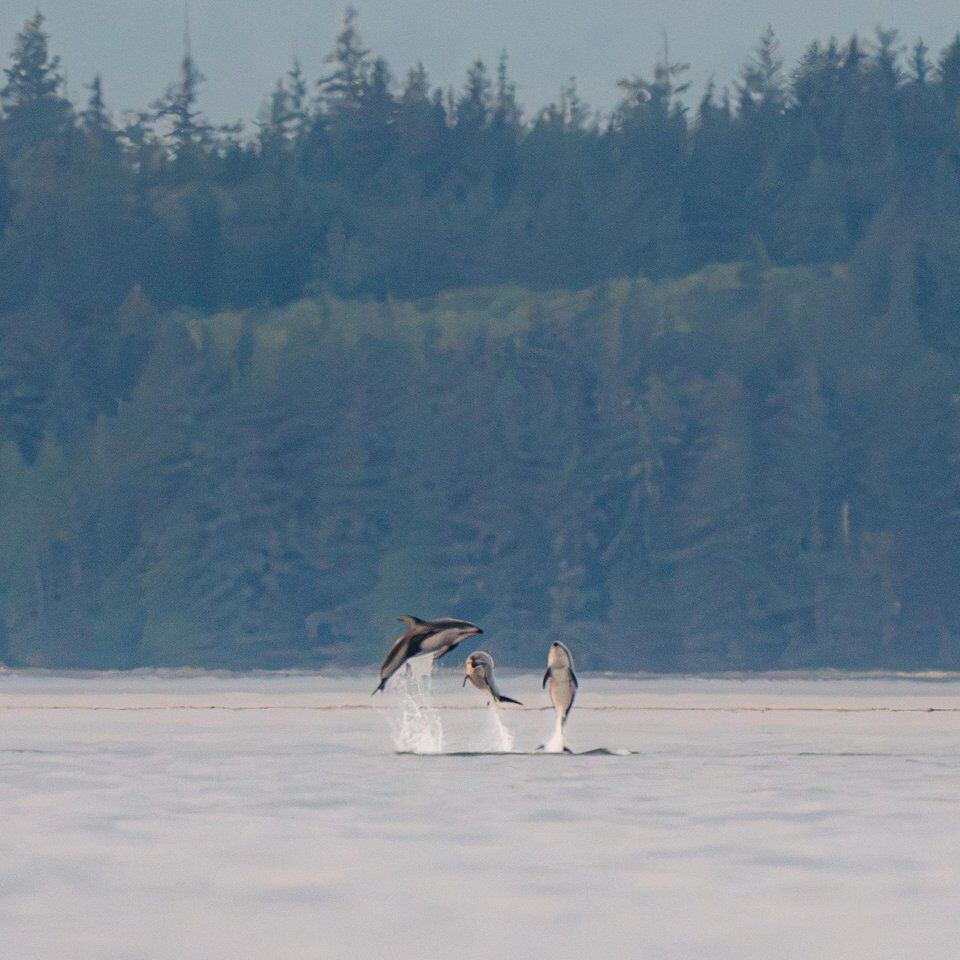
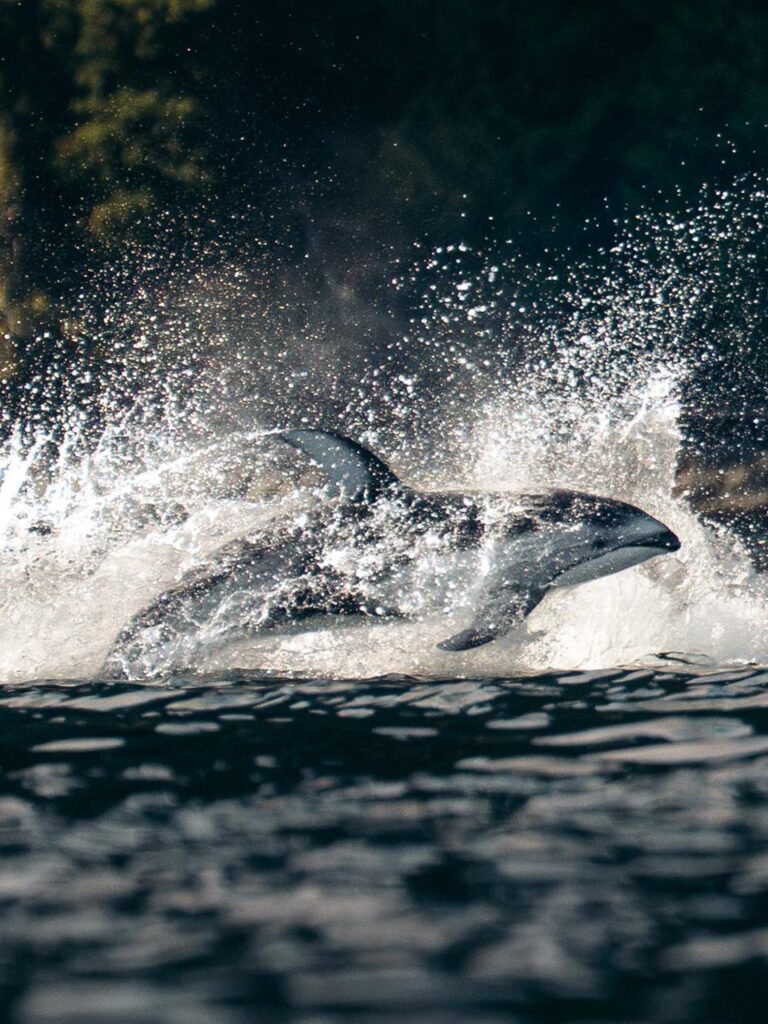
Fast, social and famously acrobatic, Pacific white-sided dolphins are among the most energetic marine mammals found along the British Columbia coast. They can travel in large groups, leap completely clear of the water and create distinctive splashes as they move quickly across the surface.
They are also one of the species we may encounter while kayaking around Telegraph Cove, Johnstone Strait and the surrounding waters with North Island Kayak.
How to recognize a Pacific white-sided dolphin
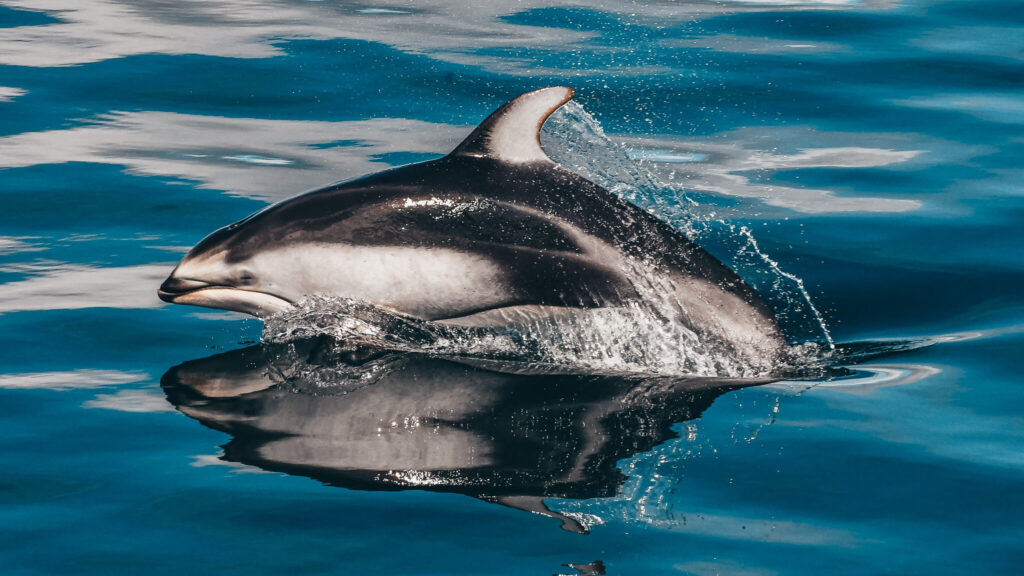
Pacific white-sided dolphins are relatively small cetaceans, generally measuring around two to 2.4 metres long and weighing approximately 140 to 180 kilograms. As their name suggests, their colour pattern is particularly distinctive.
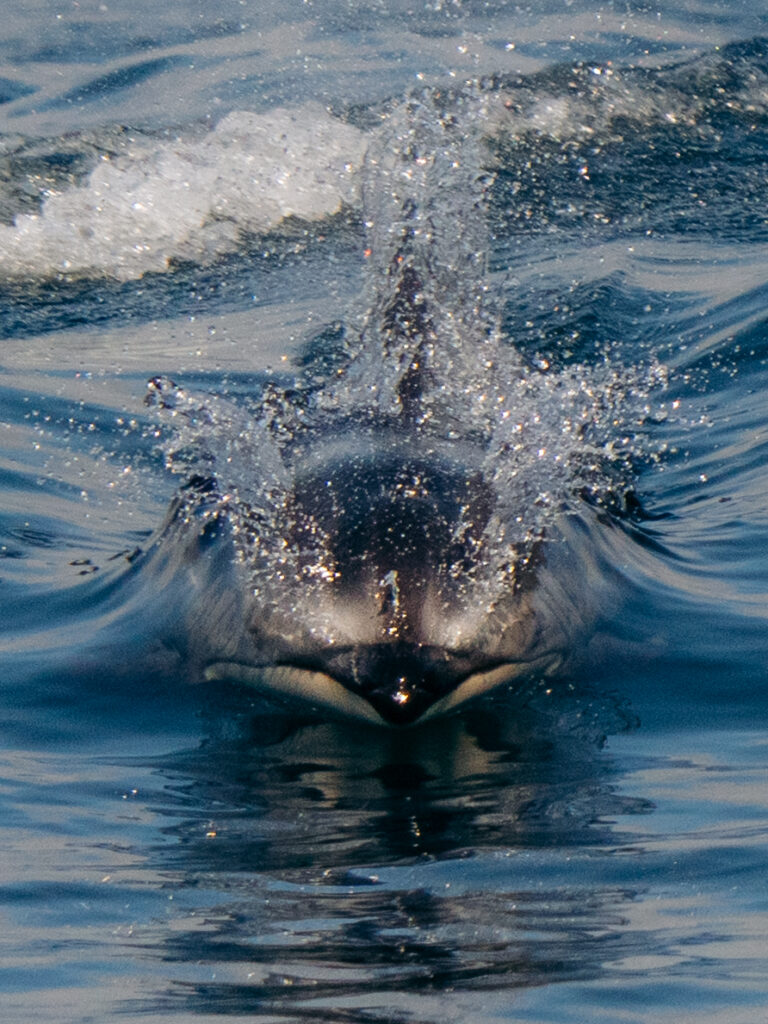
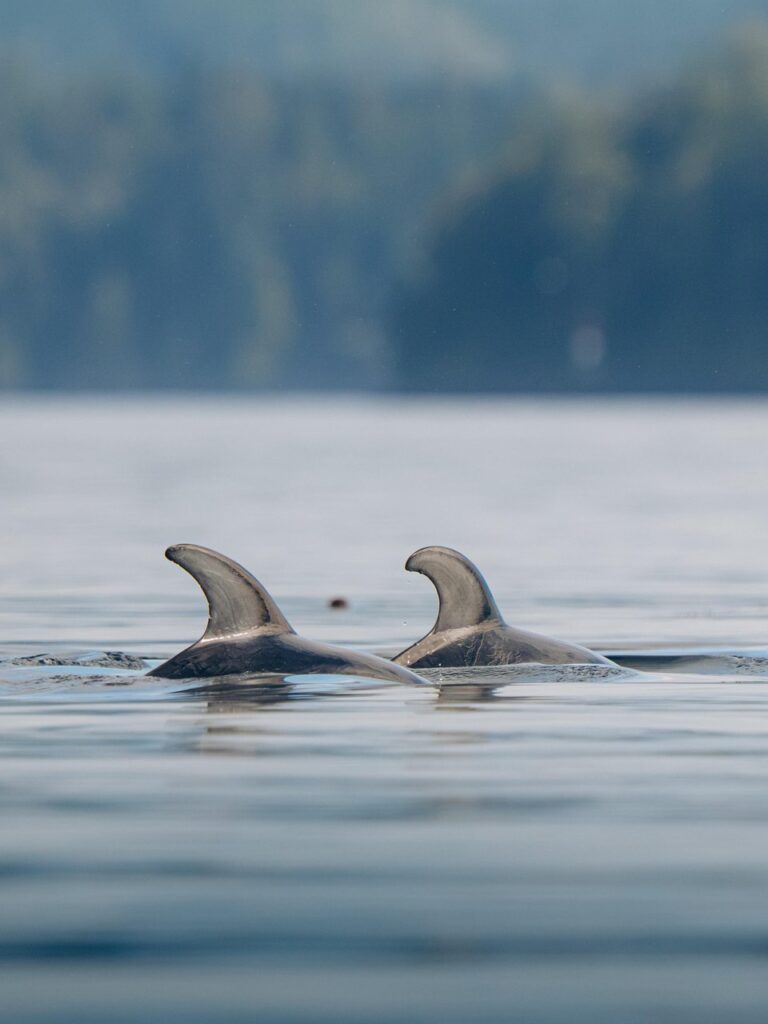
They have a dark back, pale belly and striking areas of white and light grey along their sides. Their dorsal fin is tall, curved and often appears two-toned. They are sometimes confused with Dall’s porpoises, another black and white cetacean found in British Columbia. Behaviour can provide a clue. Pacific white-sided dolphins are often extremely active at the surface and may repeatedly leap from the water.
Dolphins with a complicated history in coastal BC
One of the most interesting things about Pacific white-sided dolphins is that their modern history around Northern Vancouver Island is not as straightforward as you might expect. They are generally associated with the North Pacific and can occupy both offshore and coastal waters. However, researchers studying the Broughton Archipelago documented their return to the region in 1984 after an absence of roughly 70 years.
That does not mean dolphins had never lived here before. Archaeological evidence from Indigenous middens indicates that Pacific white-sided dolphins occurred in the region long before their modern return. Their reappearance therefore appears to represent a recolonization of habitat they had used historically. Since then, the waters around the Broughton Archipelago have become an important area for studying these dolphins. Researchers have even created photographic identification catalogues containing hundreds of individuals.
Life in a dolphin society
Pacific white-sided dolphins are highly social. Groups can contain dozens or hundreds of animals, although group size can vary considerably. Travelling together may provide advantages when searching for patchily distributed prey and detecting predators.
Their spectacular surface behaviour is one of the reasons encounters can be so memorable. They may breach, leap and move rapidly through the water. They are also known to approach vessels and ride bow waves, although responsible wildlife viewing means allowing the dolphins to determine their own behaviour rather than attempting to encourage an interaction. They can live for more than 40 years, meaning individual dolphins may spend decades navigating the waters of the North Pacific.
What do they eat?
Pacific white-sided dolphins are active predators that feed primarily on squid and schooling fish. Their diet can include herring, capelin and other small fish, depending on location and availability. The complex channels and passages around Northern Vancouver Island can provide productive feeding habitat. Research in the Broughton Archipelago suggests these normally oceanic dolphins may use the inshore environment partly because of feeding opportunities, including access to herring.
Groups can cooperate while feeding, using their numbers and speed to pursue schooling prey. But how do they hunt?
Like other toothed whales, Pacific white-sided dolphins use echolocation. They produce clicks and listen for returning echoes, allowing them to gather information about objects and potential prey around them. Sound is extremely important underwater because light disappears quickly with depth while sound travels efficiently through seawater. For a dolphin pursuing fish beneath the surface, the ocean is therefore not simply a visual environment. It is an acoustic one.
Dolphins have predators too
Being a fast and agile predator does not put Pacific white-sided dolphins at the top of every food chain. Mammal-eating killer whales, known in BC as Bigg’s killer whales, are known predators of Pacific white-sided dolphins. That creates an extraordinary ecological relationship in the waters around Northern Vancouver Island. A group of dolphins may be hunting schooling fish while simultaneously remaining potential prey for another marine mammal.
Seeing dolphins from a kayak
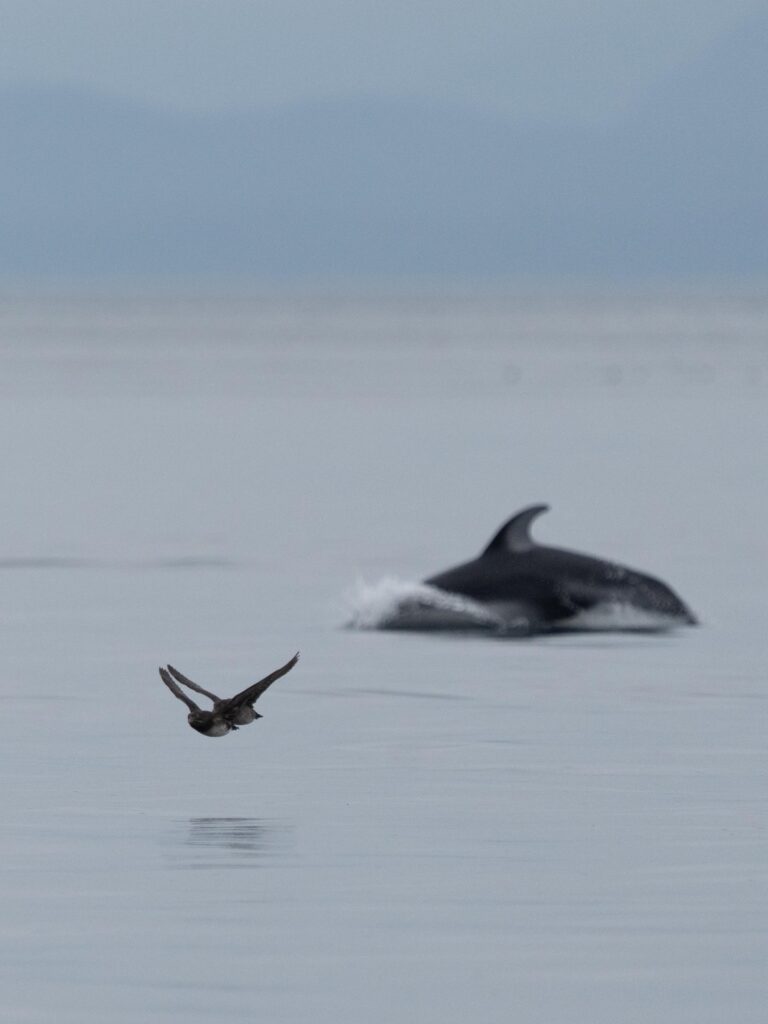
Pacific white-sided dolphins can be unpredictable, which makes encountering them particularly exciting. Sometimes the first indication is simply movement in the distance. Then another dorsal fin appears, followed by another, until it becomes clear that a much larger group is travelling through the area.
From a kayak, their speed is especially impressive.
Our North Island Kayak tours travel through an ecosystem shared by dolphins, porpoises, humpback whales, killer whales, seals, sea lions, eagles and countless other species. We never know exactly what wildlife will appear on any particular day, and that is one of our favourite things about paddling here. Pacific white-sided dolphins perfectly capture that sense of unpredictability. They are fast, social and spectacularly adapted to life in the North Pacific, and when a group appears in the waters around your kayak, the coast suddenly feels very alive.