
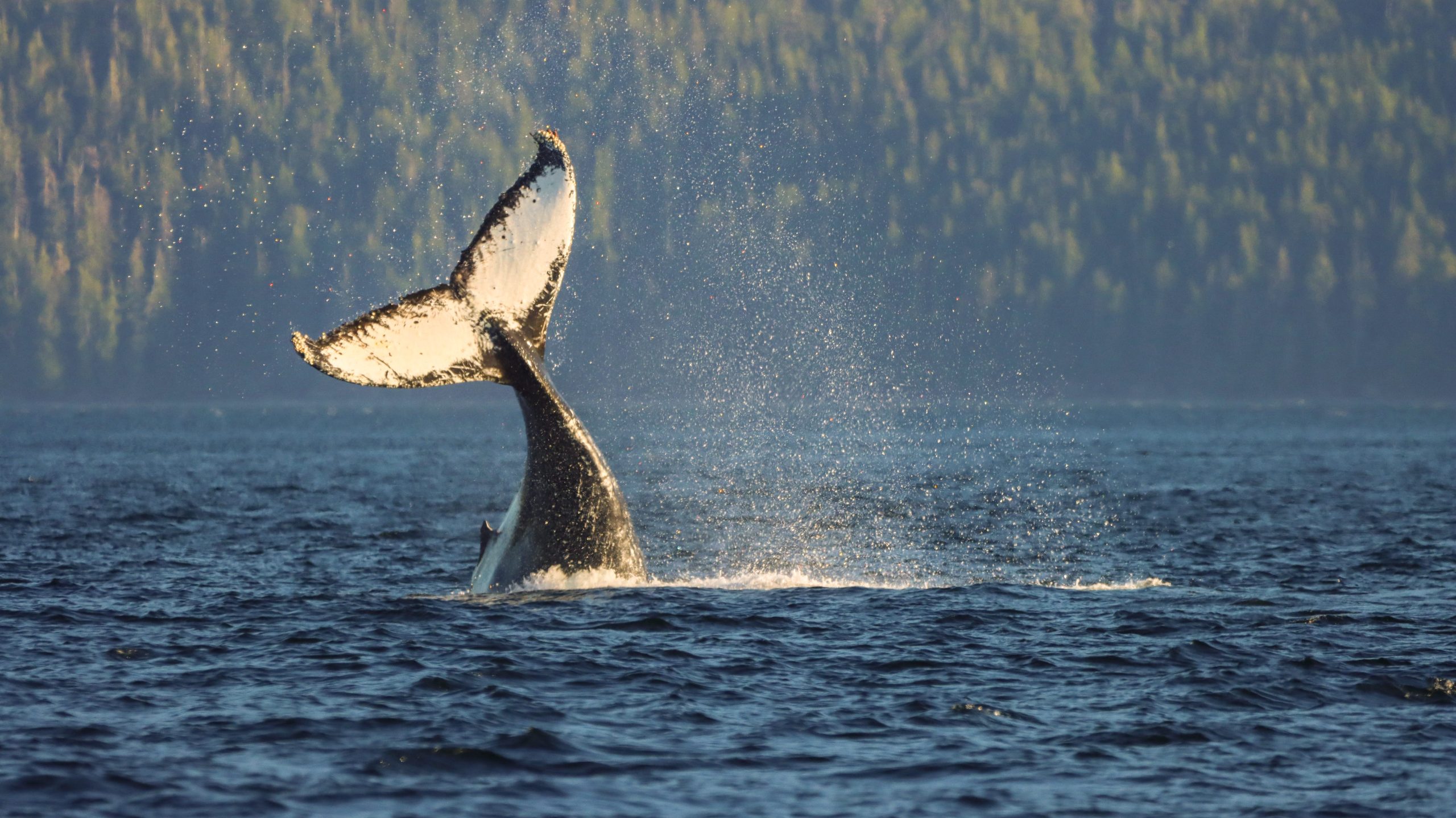
Few wildlife encounters capture the scale of northern Vancouver Island quite like seeing a humpback whale. A distant blow, an enormous tail disappearing beneath the surface, or the sudden splash of a breach can turn an already beautiful day on the water into something unforgettable.
The waters surrounding Telegraph Cove, Johnstone Strait, Blackfish Sound, and Queen Charlotte Strait are important feeding habitat for humpback whales. Many individuals return to this region year after year, making them one of the most exciting marine mammals we can encounter while exploring by kayak.
Why is northern Vancouver Island such a good place for humpback whales?
It all comes down to food.
Northeastern Vancouver Island is an exceptionally productive marine environment. Strong tidal exchanges, cold water, and abundant plankton help support a rich food web, including the small schooling fish and krill that humpback whales depend on. Many of the humpbacks found here have travelled thousands of kilometres from warmer breeding areas. Research around northeastern Vancouver Island has shown that many individuals demonstrate strong site fidelity, returning to particular feeding areas year after year.
Spring through fall is therefore an incredibly important time for these whales. They are here to feed and build the energy reserves that will sustain them during their migration and time spent in breeding grounds where feeding opportunities are limited.

What are the physical characteristics of a humpback whale?
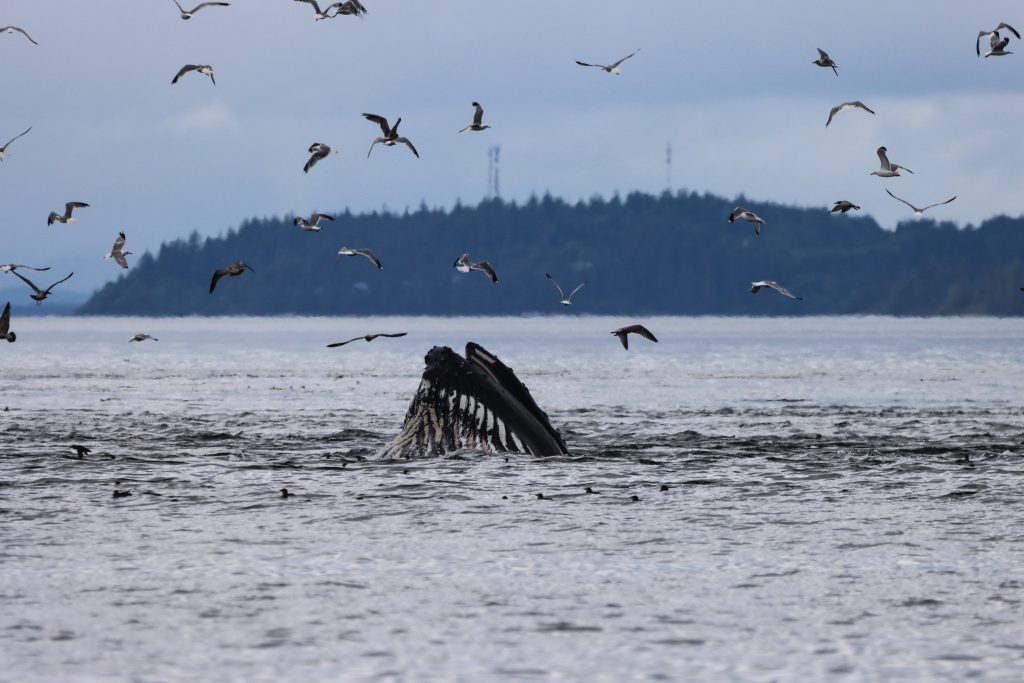
Humpbacks are enormous animals, but one of their most recognizable features is their extraordinarily long pectoral fins. Their scientific name, Megaptera novaeangliae, translates roughly to “big winged New Englander,” a reference to these huge, winglike flippers. They also have a small dorsal fin, knobby tubercles around their head and jaw, and powerful tail flukes.
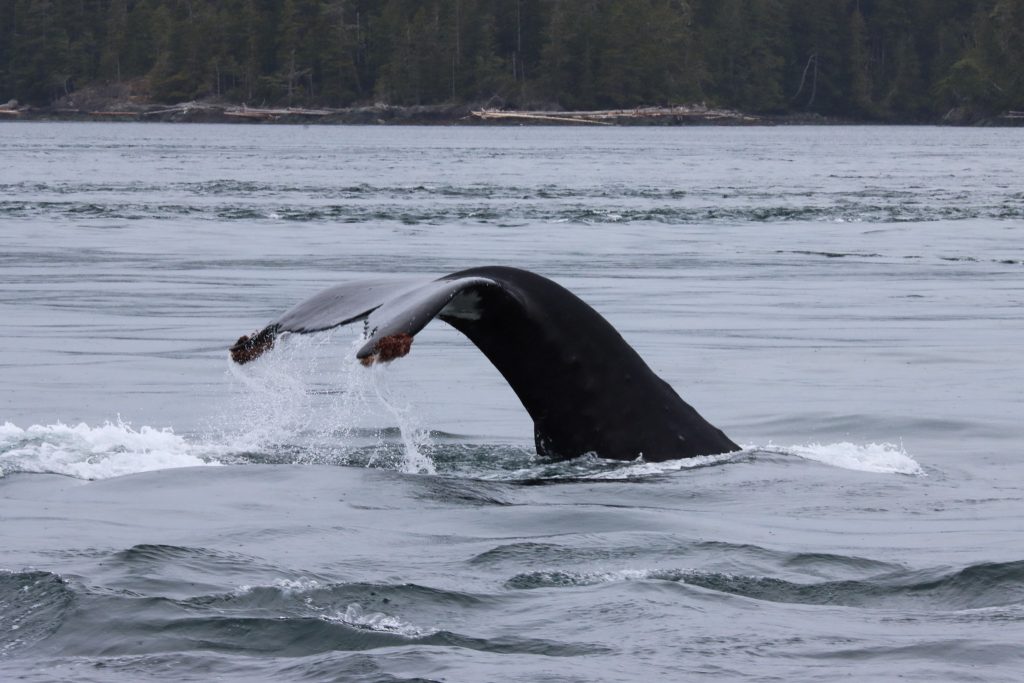
Those tails are particularly useful for researchers. The pigmentation, markings, scars, and shape of the underside of a humpback’s flukes can be unique enough to identify individual whales, almost like a fingerprint. Researchers around northeastern Vancouver Island also use dorsal fins and, in some cases, markings around the mouth to recognize individuals.

Why are humpback whales important to the marine ecosystem?
Humpbacks are not simply visitors to the ecosystem. They can help influence how nutrients move through it. When whales feed at depth and release nutrient-rich waste near the surface, those nutrients can help fertilize phytoplankton. Phytoplankton form the foundation of marine food webs, supporting everything from tiny zooplankton to fish and ultimately much larger predators. Their presence also connects different parts of the Pacific. Humpbacks spend months feeding in productive northern waters before migrating to warmer breeding areas, making them part of an enormous ecological system stretching across the ocean.
Where can you see humpback whales?
If seeing a humpback whale from a kayak is on your bucket list, Telegraph Cove is an extraordinary place to paddle. From spring through fall, humpbacks return to feed throughout the waters surrounding northeastern Vancouver Island. As the season progresses, there can be fantastic opportunities to encounter them while exploring Johnstone Strait and the surrounding waterways.
Of course, these are wild whales travelling through a huge marine environment, so an encounter can never be guaranteed. That unpredictability is part of what makes seeing one so special. Sometimes it begins with nothing more than the sound of a blow somewhere in the distance. Then a dark back appears, followed by a tail rising above the water before slipping beneath the surface again.


