Masters of the Northern Vancouver Island Coast
Few animals look more at home on the coast of Northern Vancouver Island than a Bald Eagle perched high above the water.
Bald Eagles, Haliaeetus leucocephalus, are found throughout British Columbia, but they occur at particularly high densities along the coast. The combination of productive marine waters, salmon-bearing rivers, extensive shoreline and large trees creates excellent habitat for these impressive birds.
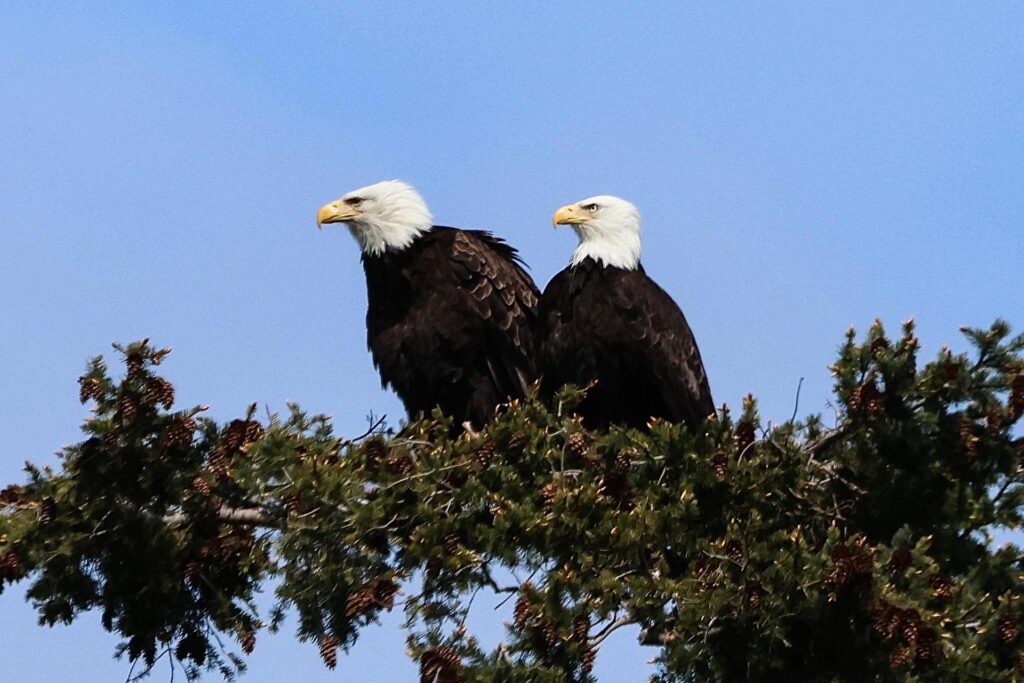
For guests joining a North Island Kayak tour from Telegraph Cove, Bald Eagles are one of the many species we may encounter while exploring the coastline. Look toward the tops of large shoreline trees, and you may spot the unmistakable white head of an adult watching the water below.
Built for life on the coast
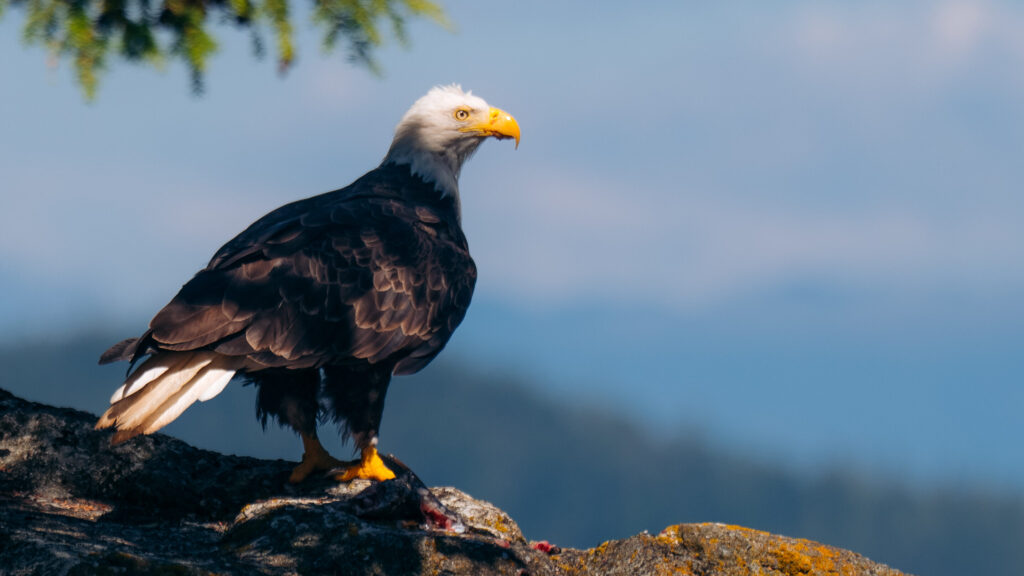
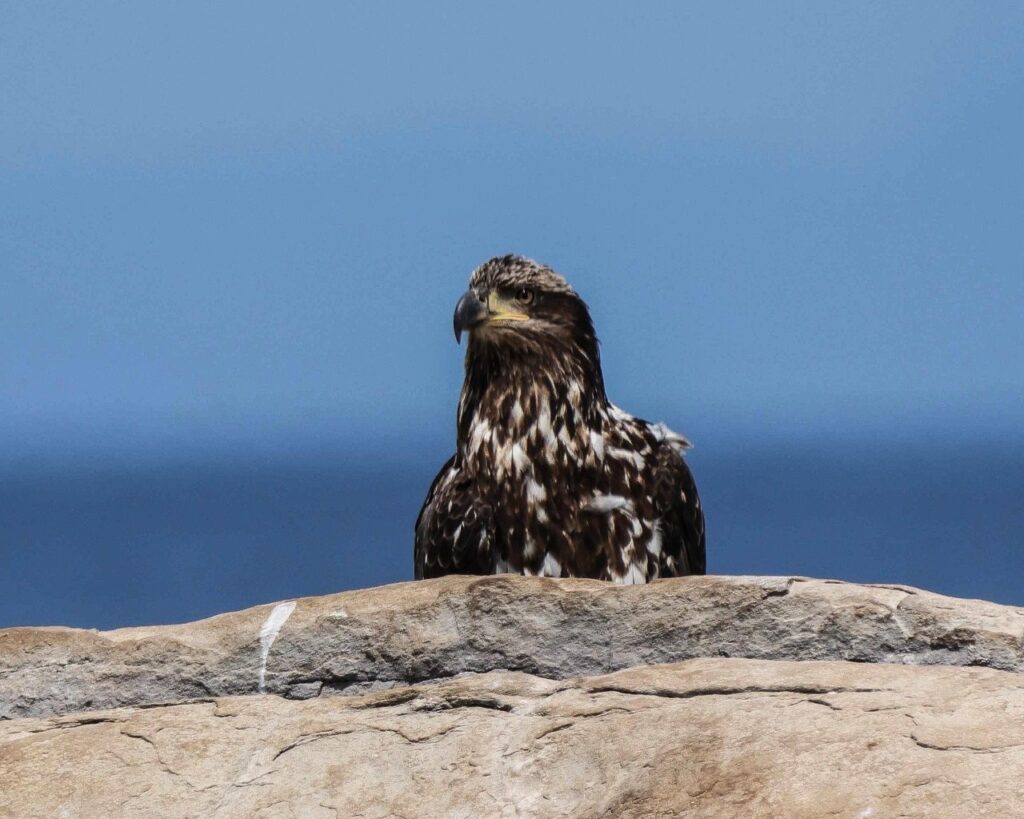
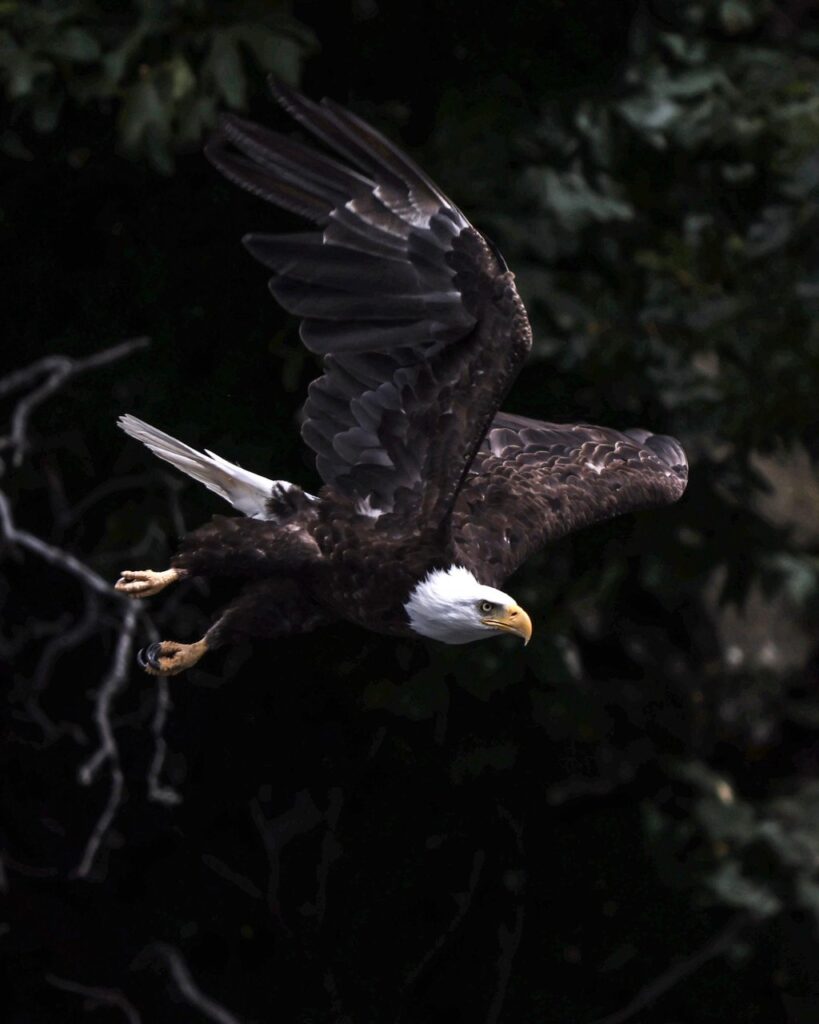
Adult Bald Eagles are easy to recognize by their dark brown bodies, white heads and tails, and large yellow bills. Their wingspan can reach more than two metres. Young eagles look very different. Juveniles are primarily brown, often with irregular patches of white across their bodies and wings. They gradually develop their familiar adult plumage as they mature, generally reaching their distinctive white-headed appearance at around five years of age.
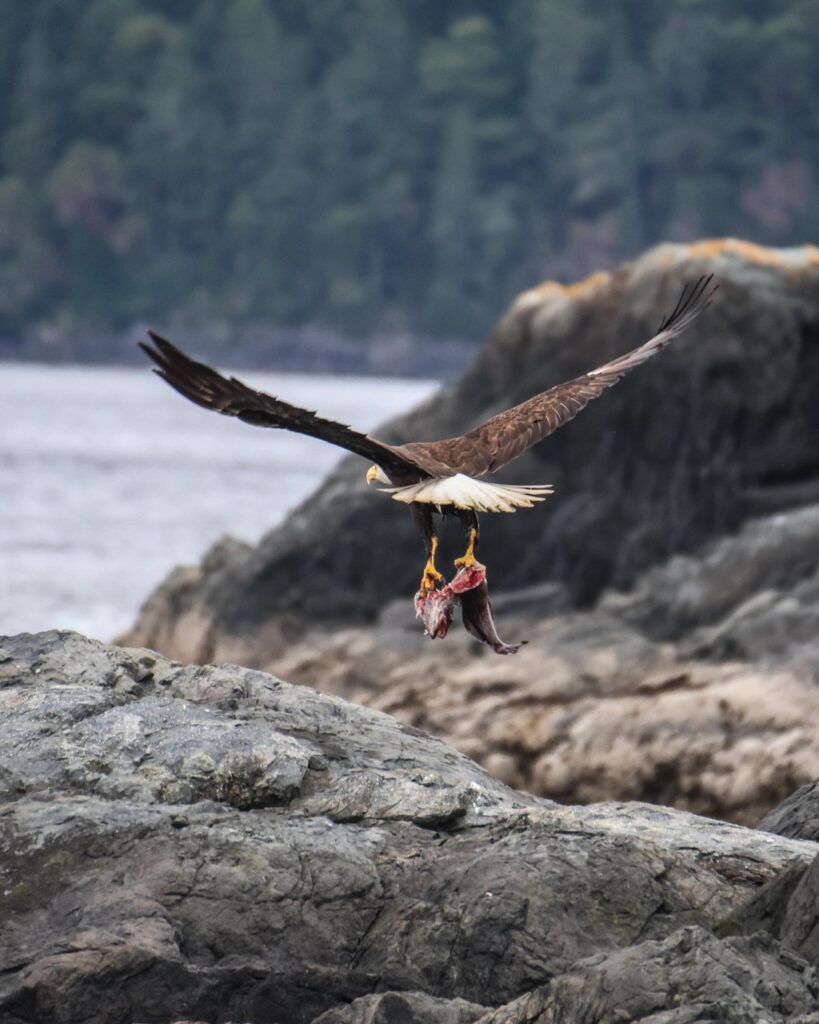
Their eyesight is exceptionally important for hunting. From a high perch, an eagle can survey a large section of shoreline before swooping down toward prey. Their feet are equally specialized. Powerful toes and curved talons allow Bald Eagles to capture and carry slippery prey such as fish.
Salmon and Bald Eagles
Although Bald Eagles are capable hunters, they are also highly opportunistic feeders. Fish are particularly important to coastal populations, and in British Columbia their movements can be closely connected to seasonal food availability.
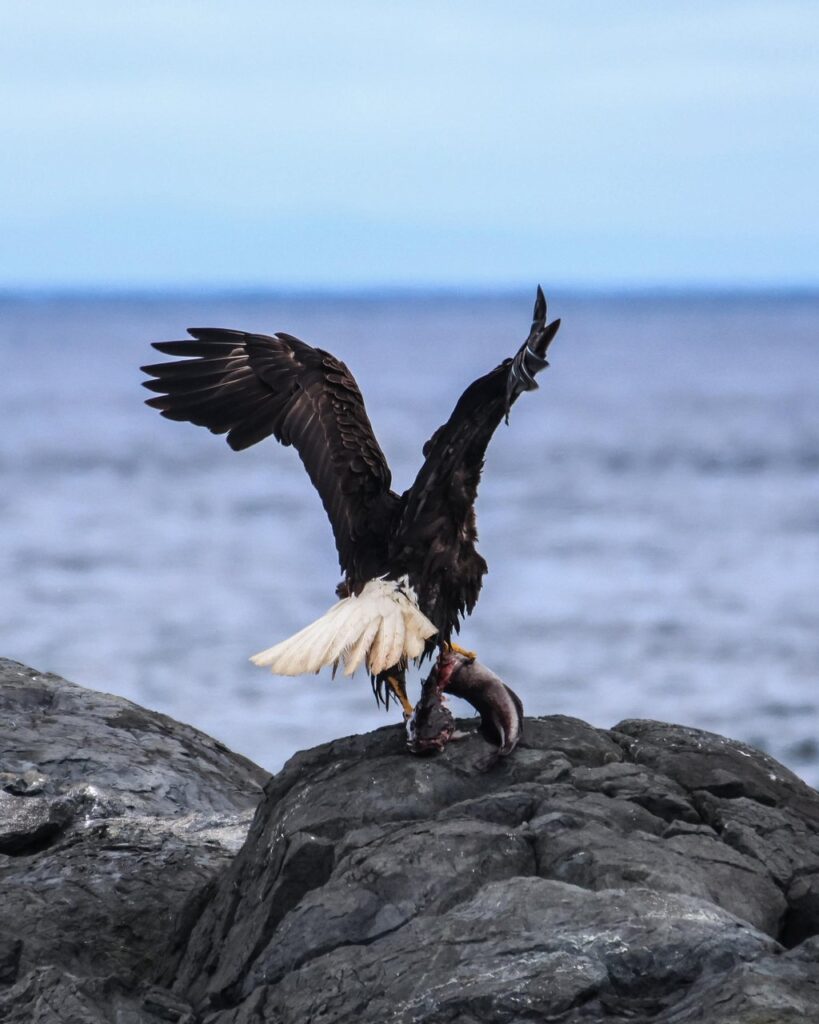
Salmon provide one of the best examples. As Pacific salmon return to rivers to spawn, Bald Eagles can gather around productive waterways to take advantage of this enormous pulse of food. Research conducted on Vancouver Island has shown that eagle abundance can closely follow the availability of spawning salmon.
After spawning, salmon carcasses also provide an important food source. This relationship connects Bald Eagles to a much larger ecological process. Salmon spend much of their lives at sea before returning nutrients to coastal rivers and forests. Eagles and other scavengers feed on these salmon and can help move those marine-derived nutrients farther into the surrounding ecosystem. Salmon, bears, eagles, forests and the ocean are therefore connected in ways that may not be immediately obvious when you first paddle past an eagle perched above the shoreline.
They eat much more than fish
Despite their association with salmon, Bald Eagles are not particularly picky eaters. Depending on what is available, their diet can include other fish, waterbirds, small mammals, crabs and carrion. Along the BC coast, seasonal concentrations of herring and other fish can also provide valuable feeding opportunities.
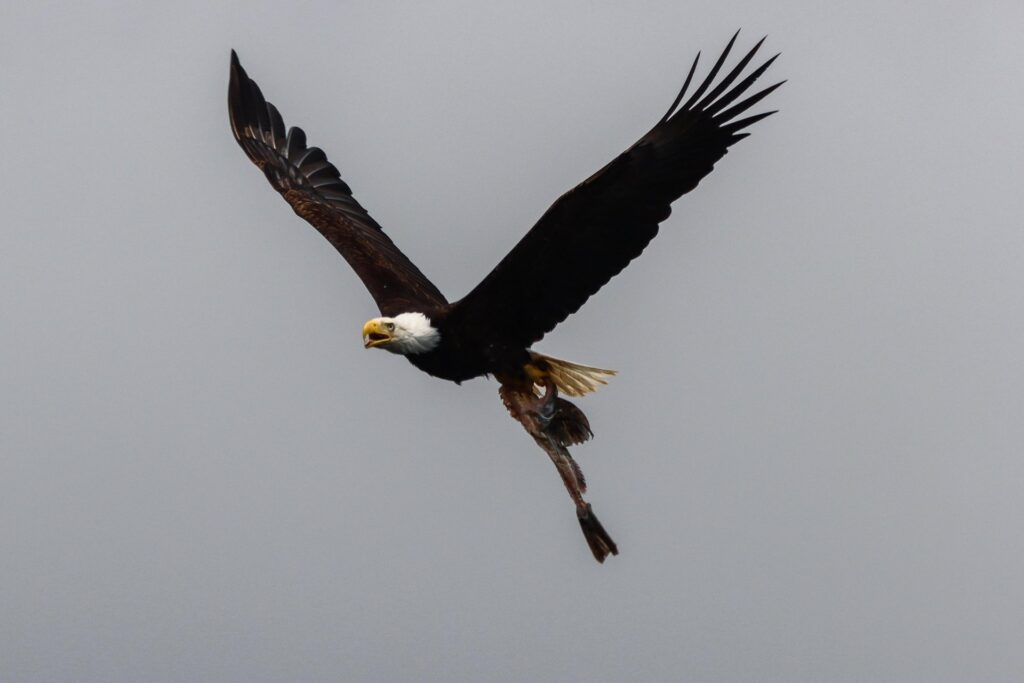
This flexibility is one reason Bald Eagles are able to thrive in such a variety of coastal environments. They are also not above stealing! Bald Eagles may chase other birds carrying fish and attempt to force them to drop their catch. Rather than spending energy capturing prey themselves, they can take advantage of another animal‘s successful hunt.
And their food choices impact their lifestyle and their nesting grounds. Bald Eagles typically nest in large trees with good visibility and relatively easy access to nearby feeding areas. Instead of starting over every year, a pair may return to the same nesting territory and continue adding material to an existing nest. Over time, these nests can become enormous structures made from branches, sticks, vegetation and other material.
Their dependence on large nesting and perching trees makes healthy coastal forests an important part of Bald Eagle habitat.
A remarkable conservation story
Today, seeing Bald Eagles along the BC coast can feel almost routine, but their abundance should not be taken for granted!
Across North America, Bald Eagles experienced severe population declines during the twentieth century. Habitat loss, persecution and contaminants all contributed. The pesticide DDT became particularly infamous because it interfered with calcium metabolism and caused eggshell thinning in birds of prey. Following restrictions on DDT and decades of conservation efforts, Bald Eagle populations recovered dramatically across much of their range. British Columbia remained an important stronghold for the species, and today Bald Eagles continue to be a familiar part of the coastal ecosystem.
Seeing Bald Eagles from a kayak
How to spot them during a tour? Rather than simply watching the sky, keep an eye on large trees along the shoreline. Eagles often perch high above the water where they can survey potential feeding opportunities. You might see one sitting almost motionless in a treetop, soaring overhead, carrying a fish or interacting with another eagle.
And remember that not every large brown eagle is a different species. If it lacks the famous white head, you may simply be looking at a younger Bald Eagle. When you join us at North Island Kayak, wildlife encounters are never guaranteed. That unpredictability is part of exploring a wild ecosystem. But Bald Eagles are one of the many incredible species that call the waters and forests surrounding Telegraph Cove home, and spotting one from your kayak is always a memorable reminder of just how connected this coastline really is!