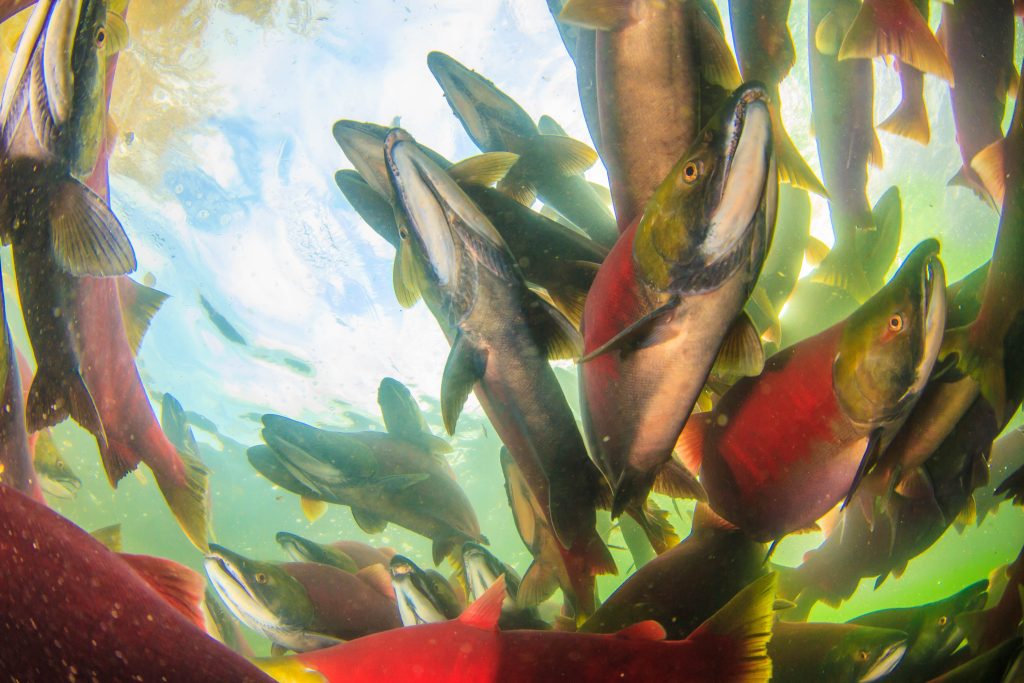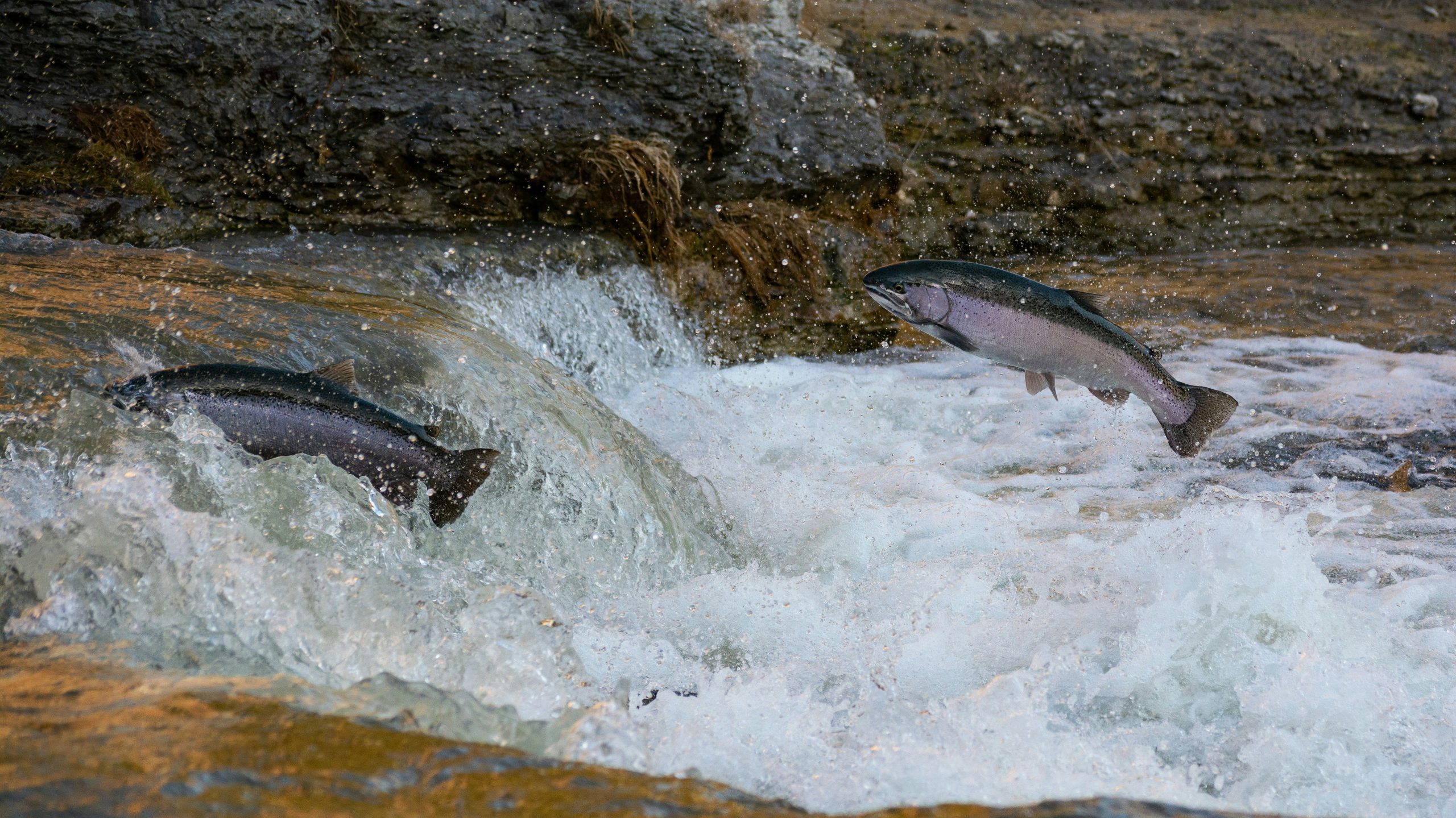
Every year, something remarkable happens in the rivers and coastal waters surrounding northern Vancouver Island. After years spent feeding and growing in the Pacific Ocean, salmon begin their journey home, returning to the freshwater systems where they were born to spawn. From late summer through fall and into early winter, this migration brings an enormous pulse of life back to the coast.
For those of us exploring Johnstone Strait and the waters surrounding Telegraph Cove by kayak, salmon season is about much more than the fish themselves. Their return connects the ocean, rivers, forests, and wildlife we encounter throughout the season.
What salmon do we have in BC?
British Columbia is home to five species of Pacific salmon: Chinook, coho, chum, pink, and sockeye.
Here on northern Vancouver Island, we are fortunate to have all five. The Nimpkish River watershed, located just south of Port McNeill and closely connected to the waters we explore around Johnstone Strait, supports Chinook, coho, chum, pink, and sockeye salmon. Sockeye populations also use Nimpkish and Woss during their life cycles. Each species has a different life history. Pink salmon have a strict two-year life cycle, while Chinook can spend considerably longer growing before returning to spawn. These differences mean there is never just one single “salmon run.” Different populations return at different times and to different rivers.
When does the salmon run happen?
On Vancouver Island, salmon runs generally begin in late summer and continue through fall and early winter, although timing varies considerably by species, river, rainfall, and water conditions. Around northern Vancouver Island, this seasonal movement becomes particularly noticeable as summer turns to fall. Available regional data show upstream migration periods extending from summer into autumn, with pink salmon moving upstream around August through October, coho around September through November, and sockeye migrations occurring through portions of summer and fall.
Rain is an important part of the story too. Returning salmon may gather near river mouths and estuaries while waiting for sufficient freshwater flows and suitable temperatures before continuing upstream. That means the first significant autumn rains can play an important role in helping salmon complete the final stage of their journey.
Why is the salmon run important for our local wildlife?
When salmon return, they bring an enormous amount of energy back to the ecosystems of northern Vancouver Island. In the ocean, salmon are an important food source for marine predators, including killer whales. Once salmon enter rivers and streams, they also become food for animals such as black bears and bald eagles. Salmon spawning areas on Vancouver Island can become important seasonal gathering places for wildlife precisely because of this abundance of food.
The connection continues even after spawning. Pacific salmon reproduce and then die, and their bodies return nutrients gathered in the ocean back into freshwater and surrounding terrestrial ecosystems. It is an extraordinary cycle. Nutrients that began in the ocean can eventually make their way into rivers, wildlife, and the forests growing alongside salmon streams.
Why are salmon considered a keystone species?
Salmon are often described as a keystone species because their abundance can influence an entire ecosystem. They connect habitats that might otherwise seem completely separate, carrying marine-derived nutrients from the Pacific Ocean into rivers and forests while providing food for numerous species along the way. That also means declines in salmon populations can have consequences far beyond salmon themselves. Pacific Salmon Foundation reports that two-thirds of Pacific salmon populations in British Columbia and the Yukon are currently below their long-term average, highlighting why continued research, habitat protection, restoration, and monitoring are so important.
It is one of the reasons North Island Kayak supports the Pacific Salmon Foundation. By contributing to organizations working to understand and protect wild Pacific salmon, we are supporting much more than one species. We are investing in the health of the rivers, forests, wildlife, and coastal ecosystems that make northern Vancouver Island such an extraordinary place to paddle. When you see salmon returning to northern Vancouver Island, you are witnessing much more than a migration. You are watching one of the natural processes that helps hold this entire ecosystem together.