Understanding Moon Jelly Blooms in Telegraph Cove
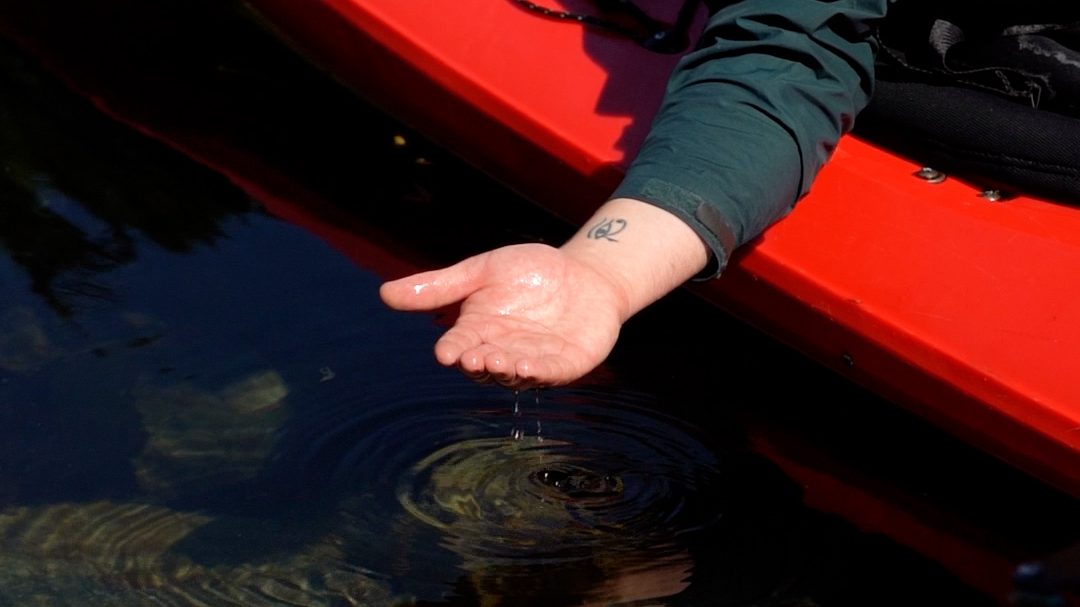
If you’ve been kayaking in Telegraph Cove recently, you’ve probably noticed them!
During several recent paddles, our guides and guests have observed large numbers of moon jellyfish drifting through the calm waters surrounding Telegraph Cove. These beautiful creatures can sometimes appear in such abundance that the water seems filled with floating translucent discs.
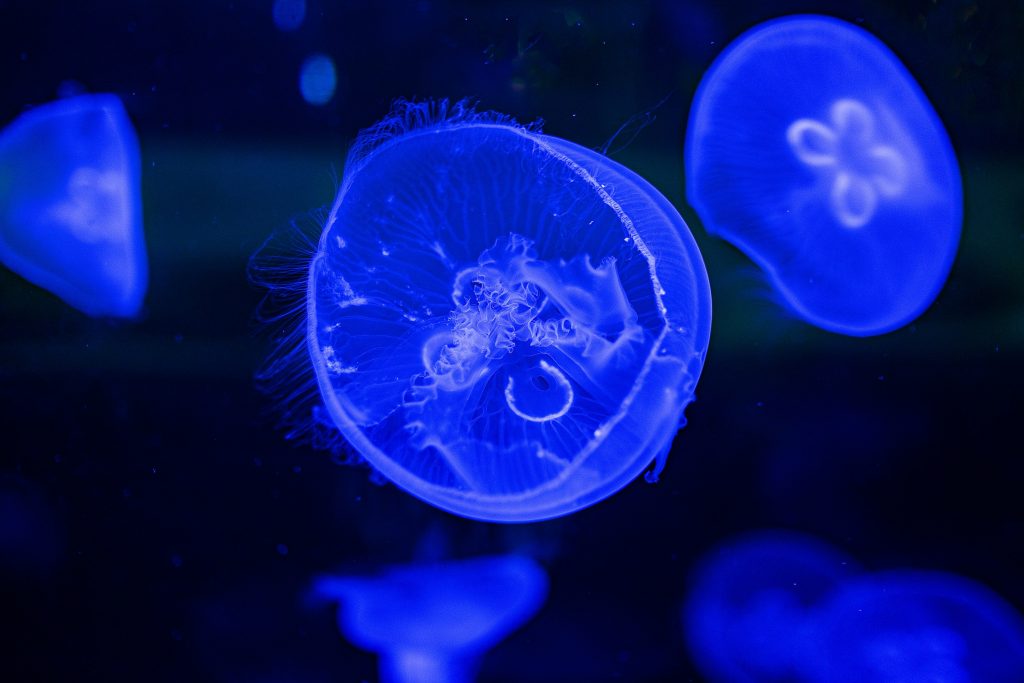
So why are there so many jellyfish right now? The answer lies in a natural phenomenon known as a jellyfish bloom. Moon jellyfish are one of the most common jellyfish species found along the British Columbia coast. Recognizable by their transparent bodies and distinctive four horseshoe-shaped reproductive organs visible through the bell, they are generally harmless to humans. Unlike some jellyfish species found elsewhere in the world, moon jellyfish have only mild stinging cells that are rarely noticeable to swimmers and kayakers.
Jellyfish blooms occur when environmental conditions favour rapid population growth. Water temperature, food availability, ocean currents, and reproductive cycles can all contribute to an increase in jellyfish numbers. During spring and summer, plankton populations often increase significantly, providing abundant food for developing jellyfish. As a result, large blooms can form throughout sheltered coastal waters.
The waters surrounding Telegraph Cove are particularly well-suited for moon jellyfish. Protected bays, productive marine ecosystems, and favourable ocean conditions create ideal habitat for these fascinating animals. Despite their simple appearance, jellyfish have an incredible life cycle. Most people only see the adult medusa stage, the floating jellyfish form we recognize. However, jellyfish begin life as tiny polyps attached to hard surfaces beneath the water. These polyps can reproduce asexually and release juvenile jellyfish when conditions are favourable, leading to sudden population increases.
Moon jellyfish play an important role in marine ecosystems. They feed on plankton, fish eggs, and small marine organisms while also serving as prey for species such as salmon, sea turtles, and some seabirds. Their presence often reflects productive ocean conditions and healthy plankton populations.
For kayakers, jellyfish blooms can create spectacular paddling experiences. On calm days, hundreds of moon jellies may be visible beneath your kayak, creating the impression of floating through an underwater galaxy. Their gentle movements and translucent bodies make them one of the most photogenic marine creatures found in British Columbia waters. Many visitors are surprised to learn that jellyfish have existed for more than 500 million years. They were drifting through Earth’s oceans long before dinosaurs walked the planet and have survived multiple mass extinction events.
While whales, dolphins, and sea lions often capture the spotlight in Telegraph Cove, moon jellyfish offer a reminder that some of the ocean’s most fascinating wildlife can be found just beneath the surface. If current conditions continue, we expect to see moon jellyfish throughout much of the summer. For guests joining a North Island Kayak adventure, this means even more opportunities to experience the remarkable diversity of life that makes Telegraph Cove one of Canada’s premier wildlife destinations.