The Elusive Cetaceans of the BC Coast
Not every wildlife encounter announces itself with a breach or a splash!
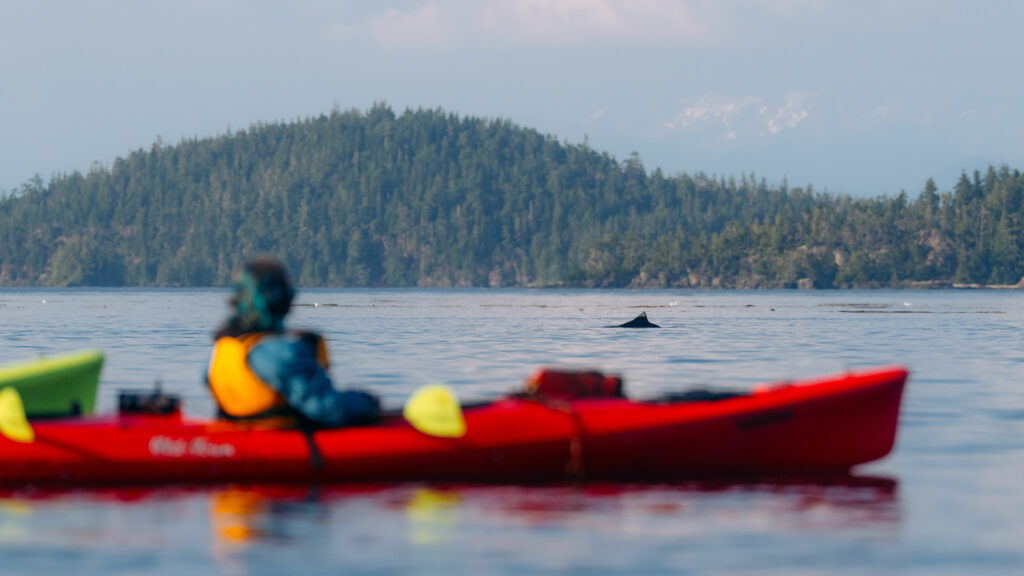
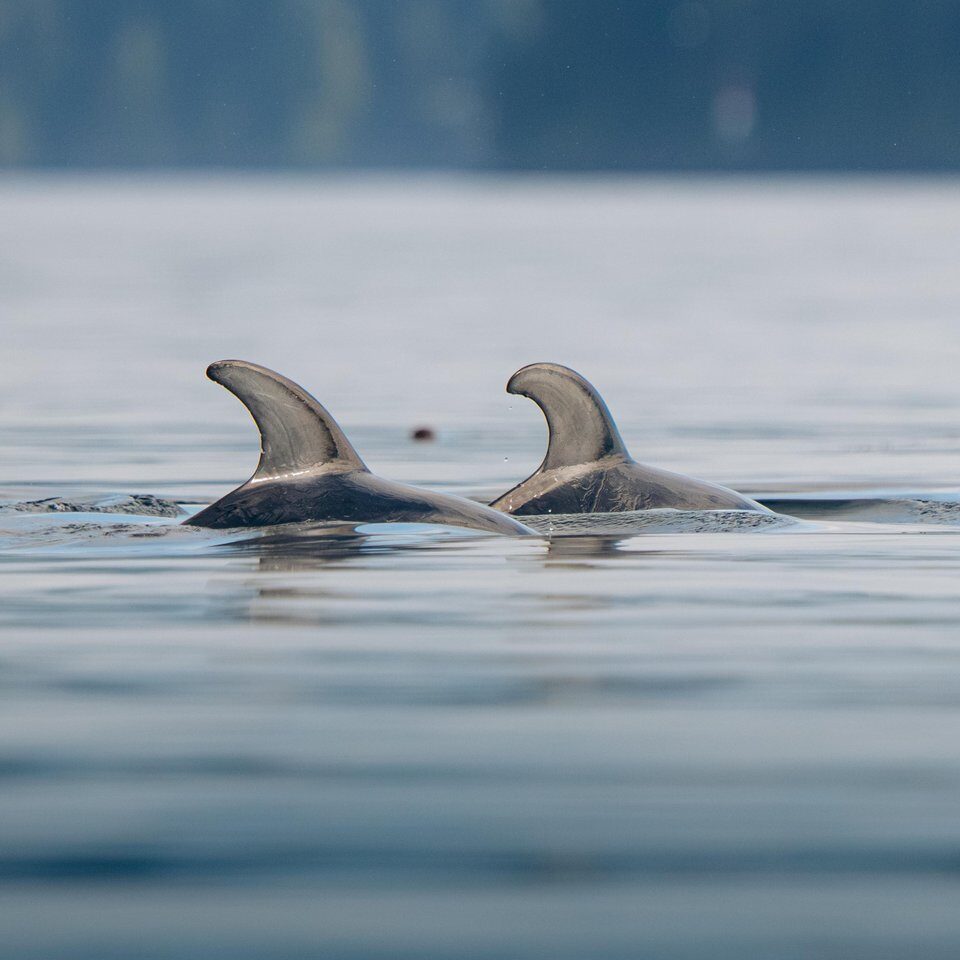
Harbour porpoises, Phocoena phocoena, are among the smallest cetaceans found around British Columbia. They are also one of the species we may encounter during our North Island Kayak tours around Telegraph Cove and the waters of Northern Vancouver Island. Unlike their energetic Pacific white-sided dolphin neighbours, harbour porpoises tend to keep a much lower profile. That makes spotting one extra special!
Porpoise or dolphin?
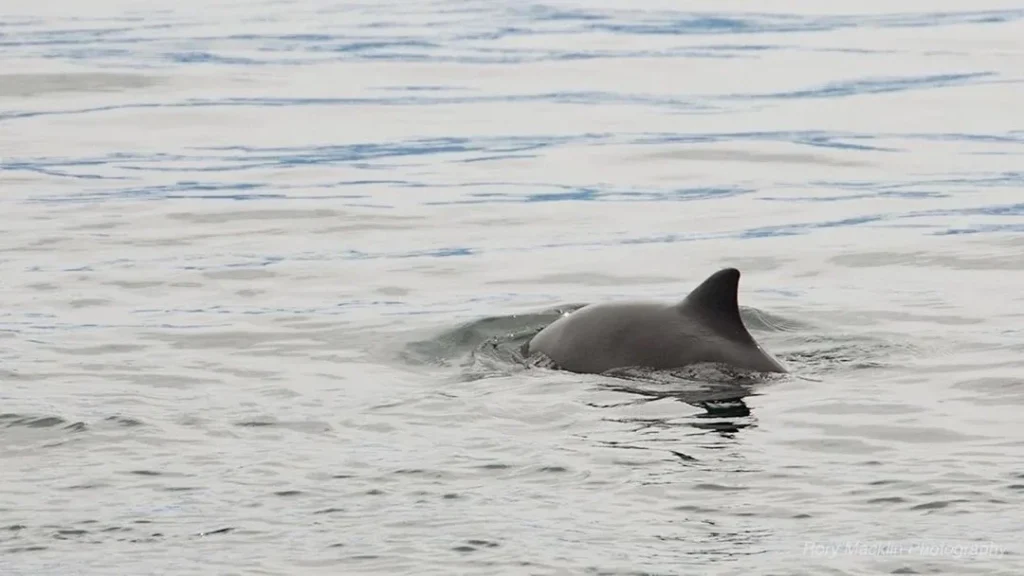
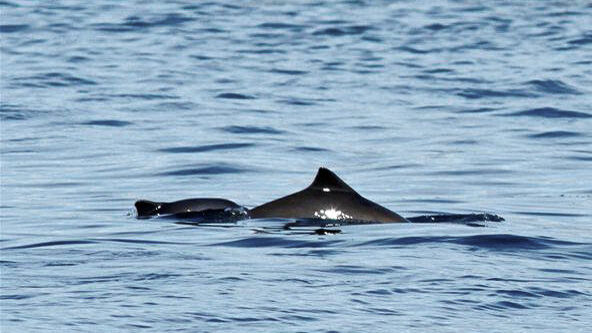
Porpoises and dolphins are both toothed whales, but they belong to different families. Harbour porpoises have short, blunt faces rather than the pronounced beak associated with many dolphins. Their bodies are compact, with dark grey backs, lighter sides, pale undersides and relatively small triangular dorsal fins.
Adults are generally only around 1.5 metres long, making them considerably smaller than many of the other cetaceans sharing these waters. Their teeth are different too: while dolphins generally have conical teeth, harbour porpoises possess small, flattened, spade-shaped teeth. You are unlikely to see that distinction from your kayak, of course. Instead, look at the animal’s overall size, shape and behaviour!
Behaviour, Nutrition and Lifespan
Harbour porpoises usually surface without much commotion. Rather than dramatically leaping from the water, they tend to roll quietly at the surface to breathe before disappearing again.
They are frequently seen alone or in small groups, although larger aggregations can occur. Their preference for coastal environments helps explain their name. Harbour porpoises can be found in bays, estuaries, fjords and other relatively shallow coastal habitats throughout much of the Northern Hemisphere. Around Northern Vancouver Island, that places them within an incredibly productive network of channels, islands and passages.
What do harbour porpoises eat?
Harbour porpoises primarily feed on relatively small fish, including schooling species such as herring. For a small marine mammal living in cold northern waters, finding enough food is extremely important. Their compact size means they cannot carry the enormous energy reserves available to much larger whales. They need productive marine ecosystems capable of supporting the fish populations on which they depend.
A short, fast-paced life
Harbour porpoises have a relatively short lifespan compared with many whales and dolphins. NOAA lists their lifespan at approximately 24 years. Females can mature when they are only three or four years old and may produce calves in consecutive years. Pregnancy lasts approximately 10 to 11 months, and births generally occur during the warmer part of the year. That reproductive strategy is quite different from large whales, some of which live for many decades and have much longer intervals between calves.

Echolocation in Porpoises
Harbour porpoises may seem quiet to us, but beneath the surface they live in a world filled with sound. They use extremely high-frequency echolocation clicks to navigate and locate prey.
Research on harbour porpoises has found that their echolocation clicks are centred roughly around 130 to 140 kilohertz, far above the upper limit of normal human hearing. Research conducted on porpoises in British Columbia found the clicks of local harbour porpoises centred at approximately 141 kilohertz.
In other words, a harbour porpoise can appear almost silent to a kayaker while simultaneously producing and interpreting a rapid stream of acoustic information underwater.
How does it work?
Echolocation works by producing sound and interpreting the echoes that return after those sounds encounter objects. As a harbour porpoise searches for prey, its click pattern can change. Research has shown that click rates increase as porpoises approach prey, eventually developing into a rapid feeding buzz during the final stages of an attempted capture.
That gives researchers a remarkable opportunity! By placing specialized underwater acoustic recorders in porpoise habitat, scientists can detect animals that may never have been visually observed at the surface. Researchers can even use patterns in their clicks to investigate when animals may be searching for prey, feeding or interacting socially.
Recent research from northern British Columbia has explored how wild Pacific harbour porpoises may also use distinctive high-rate click trains during social interactions. There is still a great deal we are learning about what these subtle animals are saying beneath the surface.
Small animals in a busy ocean
Their reliance on sound can also make harbour porpoises vulnerable to changes in their acoustic environment.
Underwater noise has the potential to interfere with behaviours such as communication and foraging. Entanglement in fishing gear is another significant threat to harbour porpoises in parts of their range. In Canada, the Pacific harbour porpoise is currently listed as Special Concern under the Species at Risk Act. Understanding where porpoises occur, how they use habitat and how human activities affect them is therefore an important part of their conservation.
Seeing a harbour porpoise from a kayak
Spotting a harbour porpoise requires a different kind of wildlife watching. Watch for a small dark back rolling through the water and a triangular dorsal fin appearing briefly at the surface. There may be no giant splash and no dramatic breach. Sometimes you only get a few seconds.But that is exactly what makes these encounters special. On a North Island Kayak tour, we spend our days moving through the same coastal ecosystem used by harbour porpoises and countless other marine species. Wildlife is always wild, so sightings can never be guaranteed.
When a tiny dorsal fin quietly appears beside an otherwise calm stretch of ocean, however, it is a wonderful reminder that some of the most fascinating activity on this coast is happening almost completely out of sight!