One of the animals you are most likely to meet while paddling around northern Vancouver Island is also one of our favourites: the harbour seal.
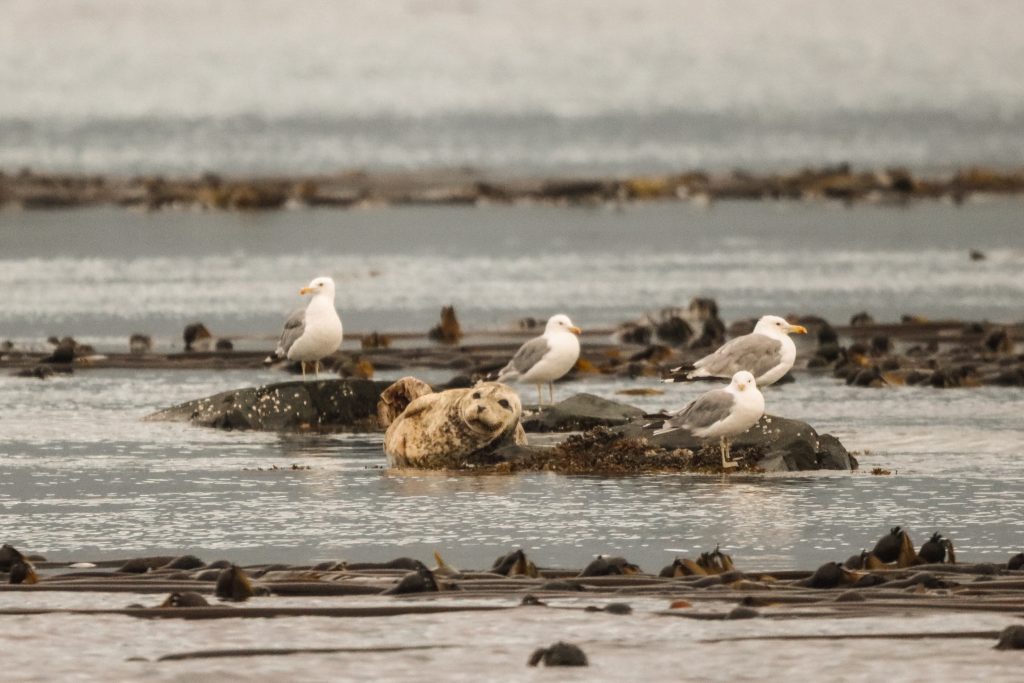
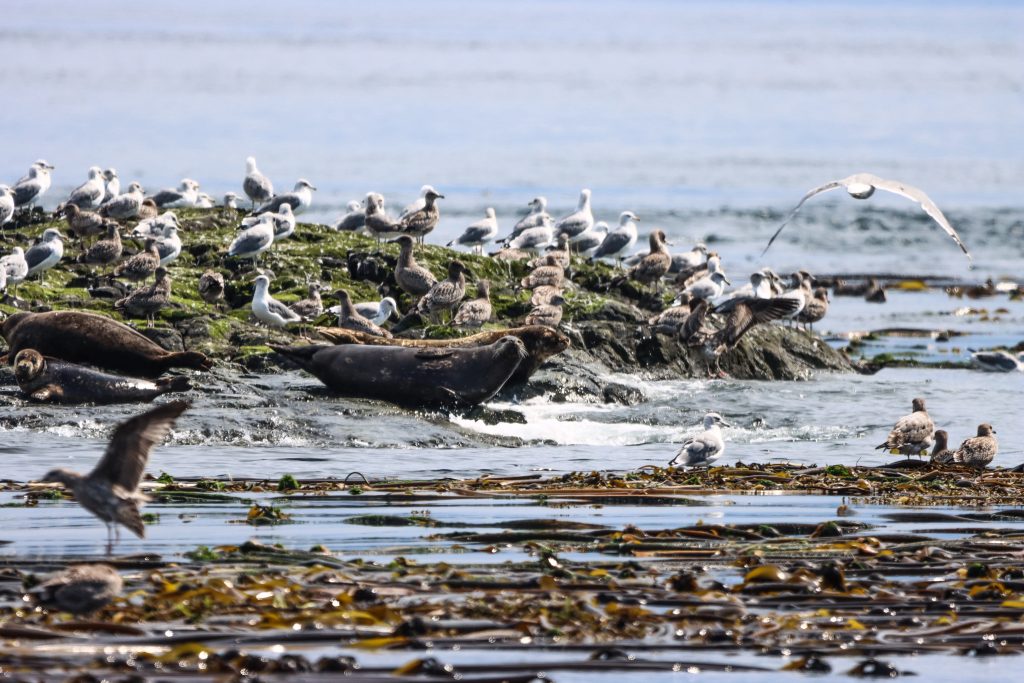
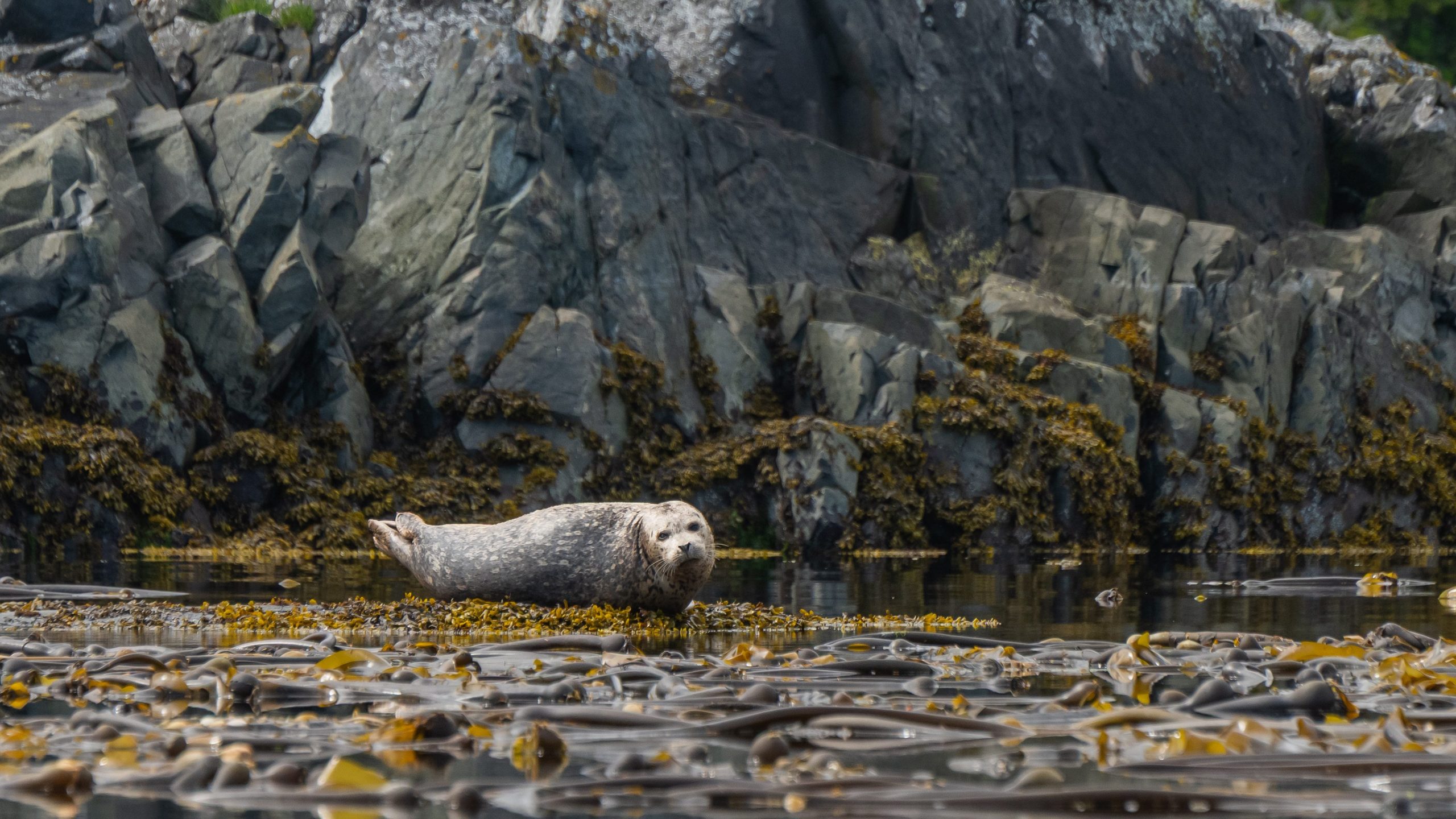
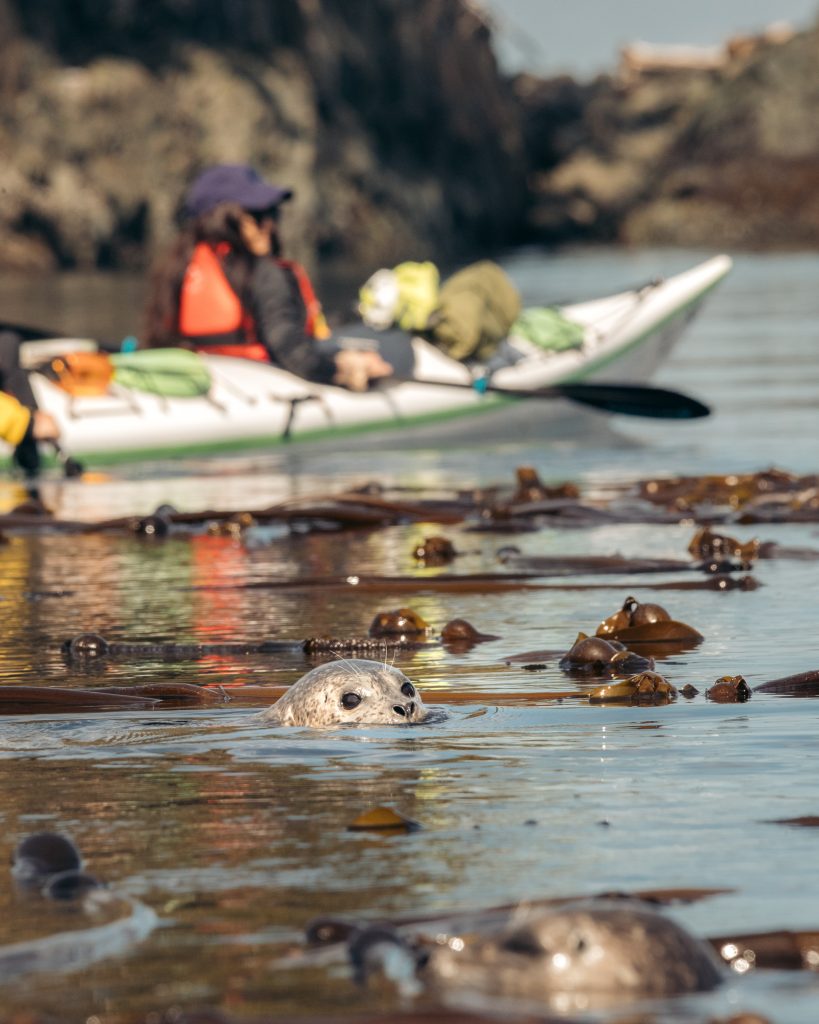
Harbour seals are found throughout British Columbia’s coastal waters, and the rocky shorelines, islands, reefs, sheltered bays, and productive marine waters surrounding Telegraph Cove and Johnstone Strait provide plenty of opportunities to spot them. Sometimes you will find them hauled out along the shoreline, while other times all you will see is a round head quietly appearing above the surface to investigate the kayaks passing by.
Why is northern Vancouver Island such a good place for harbour seals?
Harbour seals are extremely well suited to the coastline of northern Vancouver Island. Unlike some marine mammals that undertake lengthy seasonal migrations, harbour seals can remain in coastal areas throughout the year.
They rely on coastal and estuarine waters for feeding and use intertidal haulout sites to rest, moult, and give birth. British Columbia’s complex coastline provides an abundance of exactly this kind of habitat, with rocky reefs, islands, sheltered channels, and productive shallow waters. In fact, harbour seals are the most abundant pinniped in the Northeast Pacific and are found throughout coastal British Columbia.
Around Telegraph Cove, the maze of islands and waterways surrounding Johnstone Strait creates excellent habitat for both seals and many of the fish species they depend on.
What are the physical characteristics of a harbour seal?
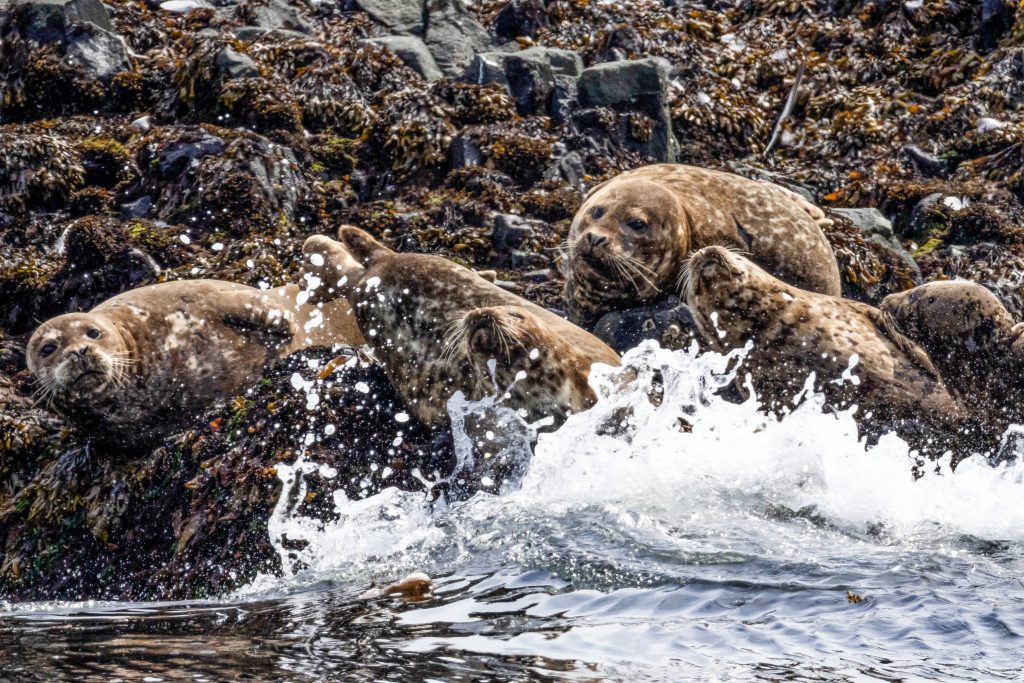
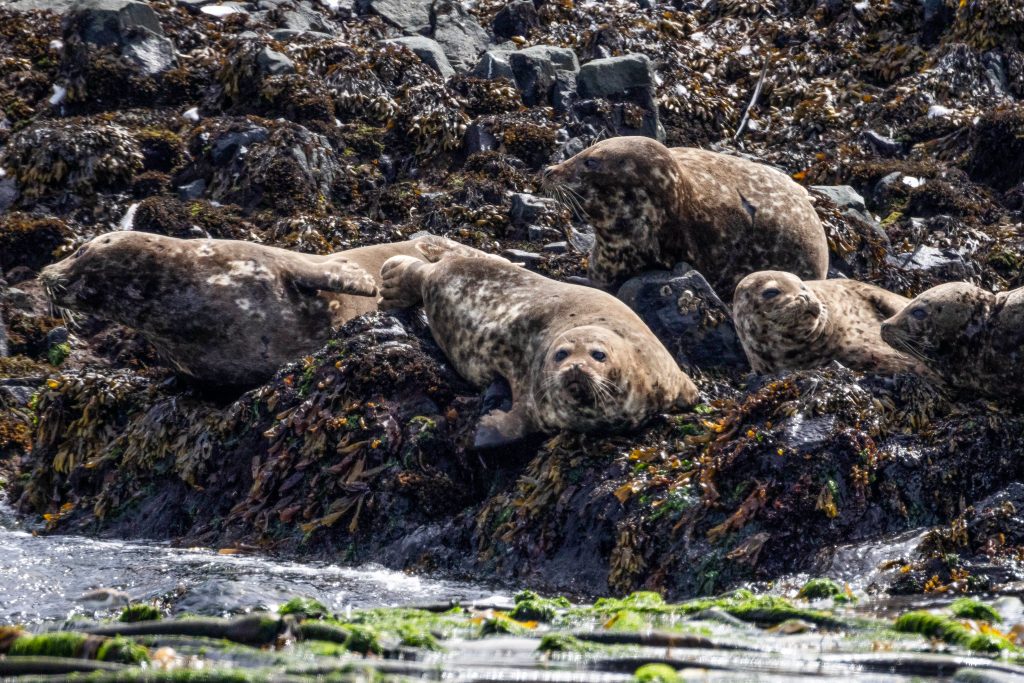
Harbour seals have a wonderfully distinctive appearance. They have rounded heads, large eyes, prominent whiskers, and no visible external ear flaps. Their streamlined bodies are perfectly adapted for moving through the water. Their colouring varies considerably between individuals, ranging from pale grey and silver to dark brown or almost black, usually covered in spots or mottled patterns. These markings can help individual seals blend into the rocky shorelines where they haul out.
Adults can reach approximately 1.85 metres in length and weigh around 110 kilograms. Despite that size, they are remarkably agile underwater. Harbour seal pups are also capable swimmers very quickly, with pups able to swim and dive within hours of being born. But harbour seals are not at the top of the food chain. They are an important prey species for Bigg’s killer whales, the mammal-eating ecotype of killer whale found along the British Columbia coast. Fisheries and Oceans Canada describes harbour seals as a key prey species for Bigg’s killer whales, and they are one of the mammals these apex predators regularly hunt.
It creates an incredible ecological connection. Fish such as herring and salmon can be eaten by harbour seals, while those seals can, in turn, become prey for Bigg’s killer whales.
Where can you see harbour seals around Telegraph Cove?
If harbour seals are on your wildlife wish list, exploring the waters around Telegraph Cove by kayak gives you an excellent chance of spotting them. They are one of our most regularly encountered marine mammals, and their preference for coastal habitats means they can often be found around the same sheltered waterways, rocky shorelines, and islands that make this region so spectacular for sea kayaking.
Of course, wildlife is always wild, so we can never guarantee an encounter. But if you spend enough time paddling around Telegraph Cove, there is a very good chance that at some point you will notice a little round head popping above the surface to take a look at you.
For something so common along our coastline, harbour seals never stop being special. They are curious, beautifully adapted to their environment, and an important part of the food web that makes northern Vancouver Island such an extraordinary place to explore!