
Their Migration and the Best Time to See Them in Telegraph Cove
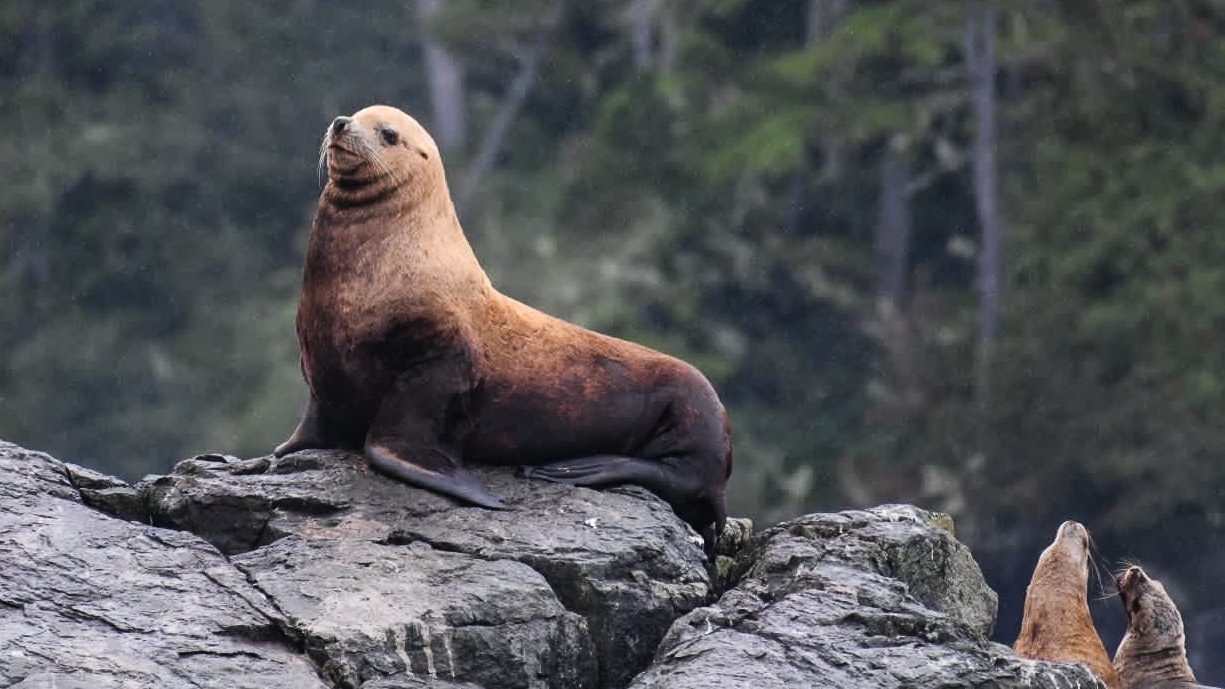
Few marine mammals are as impressive as the Steller sea lion. With massive males weighing over 1,000 kilograms and echoing roars that can be heard from hundreds of metres away, they are among the largest and most charismatic wildlife species found along British Columbia’s coast.
While many visitors come to Telegraph Cove hoping to see whales, Steller sea lions are often one of the highlights of the trip. Their seasonal movements bring hundreds of these remarkable animals through the waters surrounding Northern Vancouver Island, making Telegraph Cove one of the best places in British Columbia to observe them in the wild.
Meet the World’s Largest Sea Lion
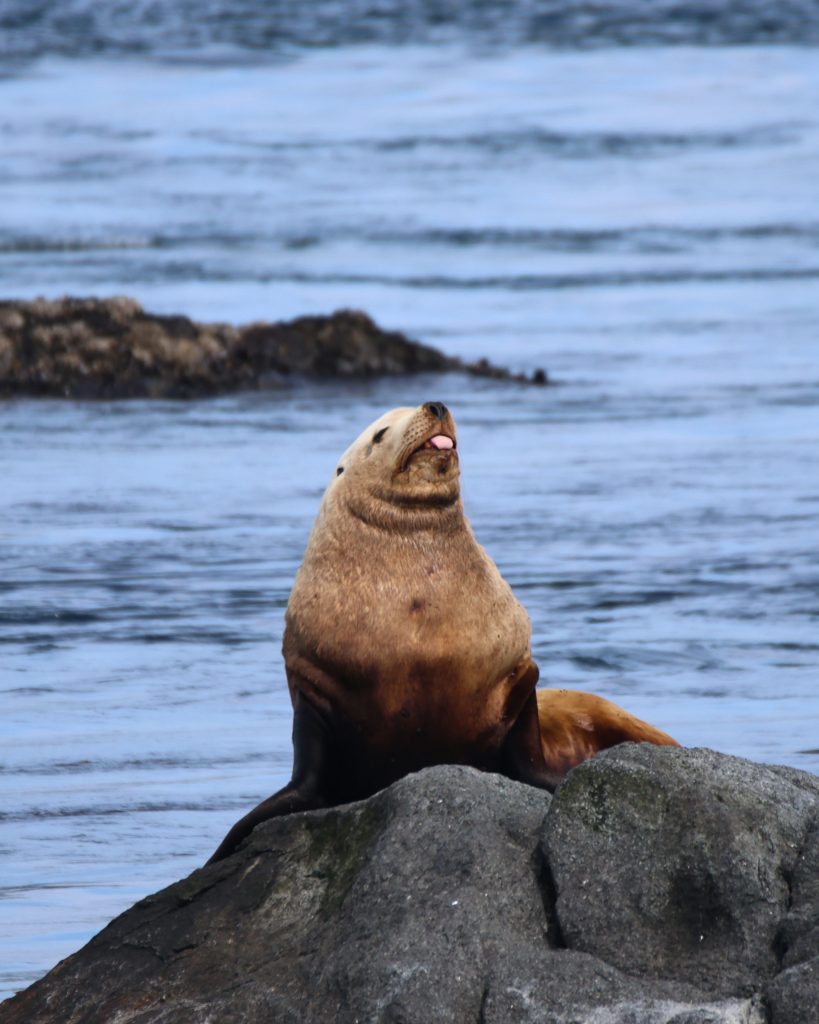
Steller sea lions are the largest members of the eared seal family. Unlike true seals, they have visible external ear flaps and powerful front flippers that allow them to “walk” across rocks and docks with surprising agility.
Adult males, known as bulls, can reach lengths of more than 3 metres and weigh over 1,100 kilograms. Females are considerably smaller, typically weighing between 240 and 350 kilograms. Their light tan or golden colour makes them easy to distinguish from the darker California sea lions found farther south.
Do Steller Sea Lions Migrate?
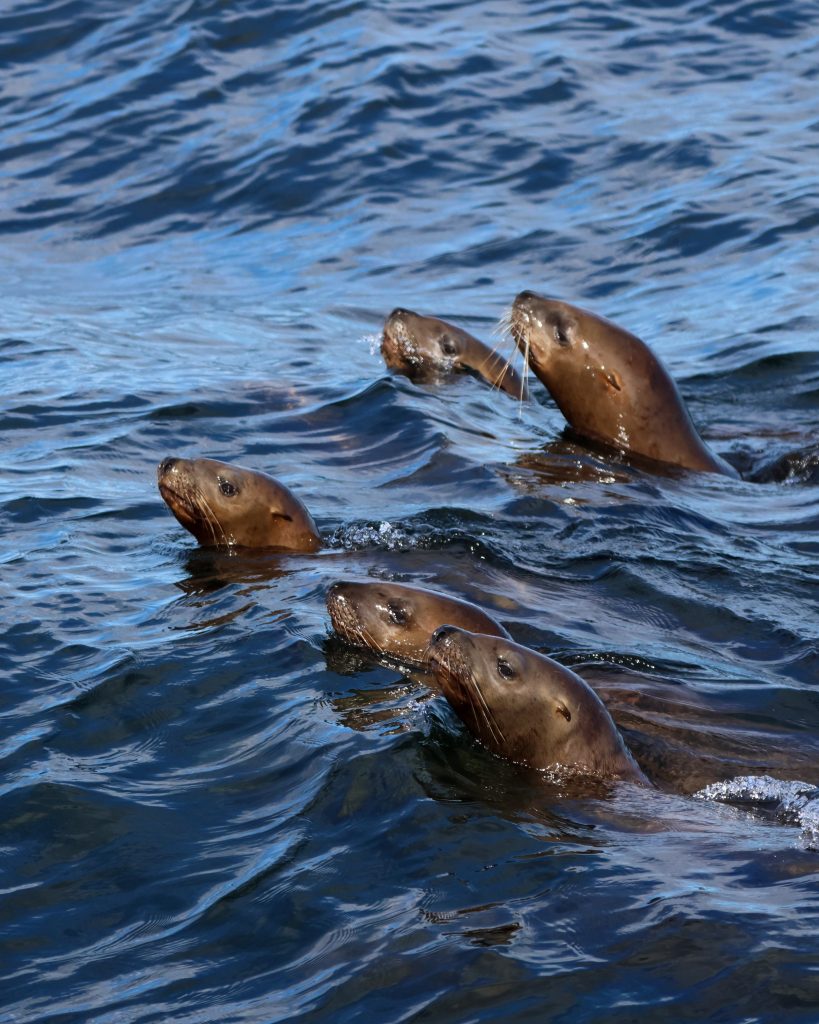
Yes, but not in the way many people imagine. Rather than undertaking one long annual migration like humpback whales, Steller sea lions move seasonally between breeding areas and feeding grounds, often travelling hundreds of kilometres depending on food availability. The eastern population, which includes animals found in British Columbia, breeds primarily from late May through July on remote offshore rookeries along the coast of British Columbia, Southeast Alaska, Oregon, and California.
After the breeding season, many individuals disperse widely throughout the Pacific Northwest. Adult males are especially mobile, travelling long distances in search of productive feeding areas. Unlike humpback whales, not every individual follows the same route. Some remain relatively close to their breeding sites, while others travel hundreds of kilometres between seasons.
Why Do They Come to Northern Vancouver Island?
The answer is food! Telegraph Cove sits at the entrance to Johnstone Strait, one of the most productive marine ecosystems on Canada’s Pacific coast.
Powerful tidal currents continuously mix nutrient-rich water from the deep, fuelling enormous blooms of plankton that support vast schools of herring, hake, sand lance, rockfish, salmon, and squid.
For a Steller sea lion, this is an ideal buffet. Adult sea lions consume approximately 15 to 25 kilograms of food each day, although large males may eat considerably more during periods of intensive feeding. Their diverse diet allows them to take advantage of seasonal changes in prey availability throughout the year.
The Best Time to See Steller Sea Lions in Telegraph Cove
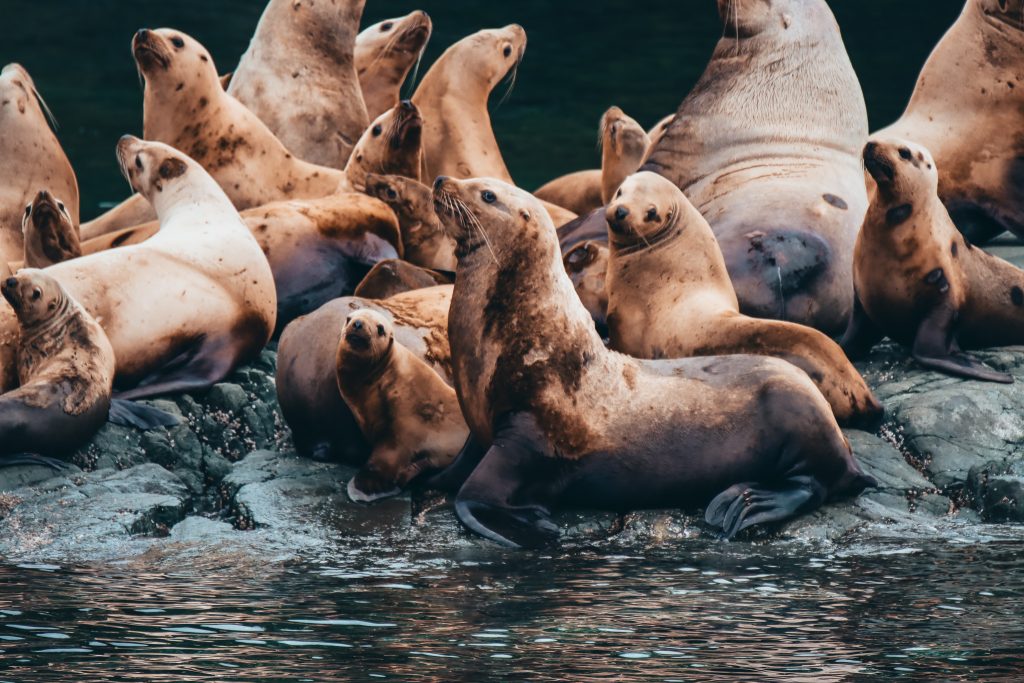
Although Steller sea lions can be seen throughout the season, late summer generally offers the best viewing opportunities.
From July through September, salmon begin returning to British Columbia’s rivers in enormous numbers. This seasonal abundance attracts not only Northern Resident killer whales and humpback whales, but also large groups of Steller sea lions.
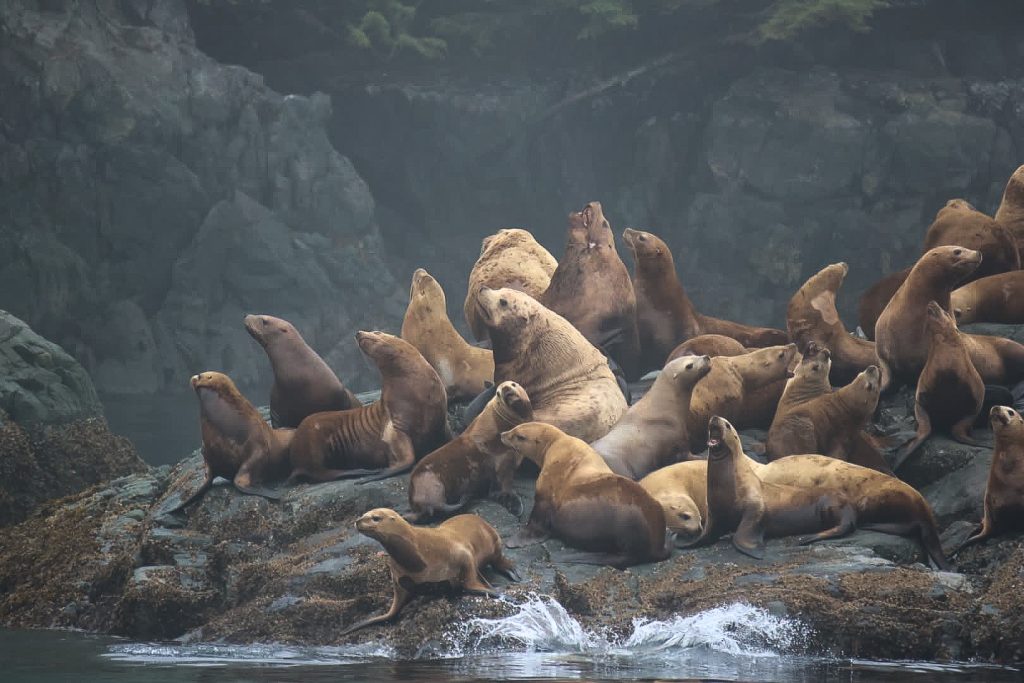
Visitors often encounter them hauled out on rocky islets, resting between feeding bouts, or swimming around salmon-rich channels. Large males frequently dominate the best haul-out locations, where they bark loudly and display their impressive size while younger animals jockey for space nearby.
Masters of the Marine Environment
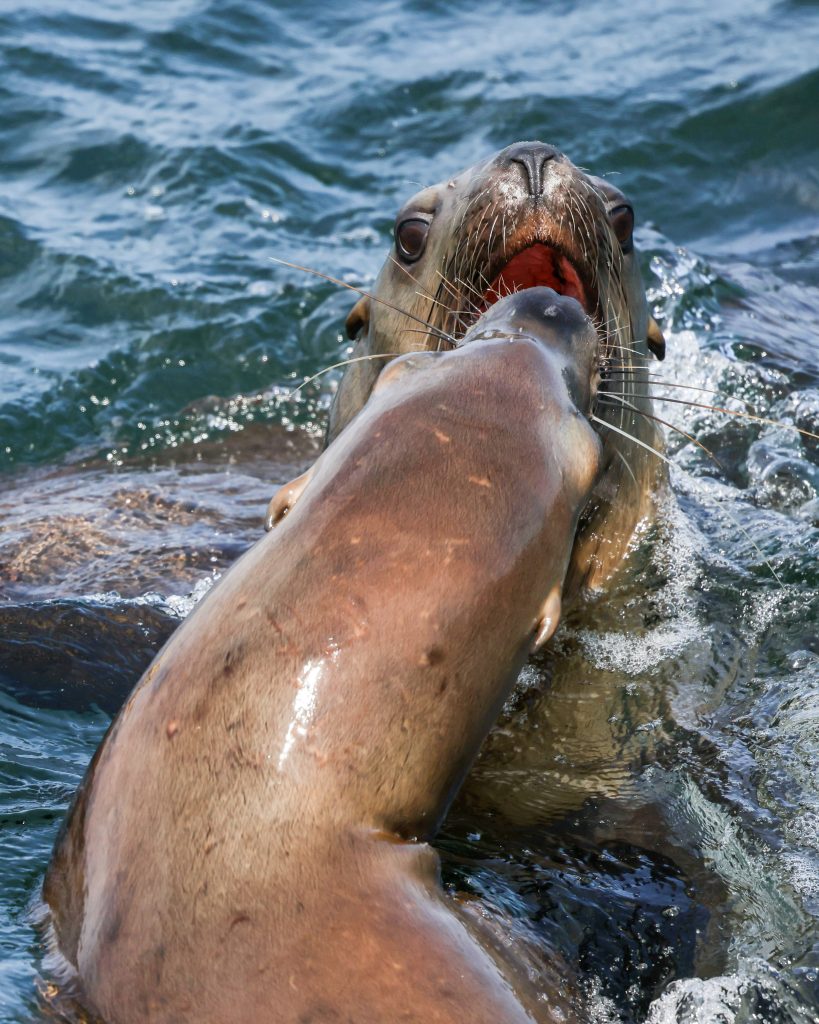
Despite their enormous size, Steller sea lions are remarkably agile underwater.
They routinely dive to depths exceeding 200 metres while searching for prey, although most feeding dives are much shallower. Using powerful foreflippers for propulsion, they can accelerate rapidly and pursue fast-moving fish with surprising speed and manoeuvrability.
Their sensitive whiskers, known as vibrissae, help detect subtle water movements created by swimming fish, allowing them to locate prey even in dark or murky water.
Social Animals
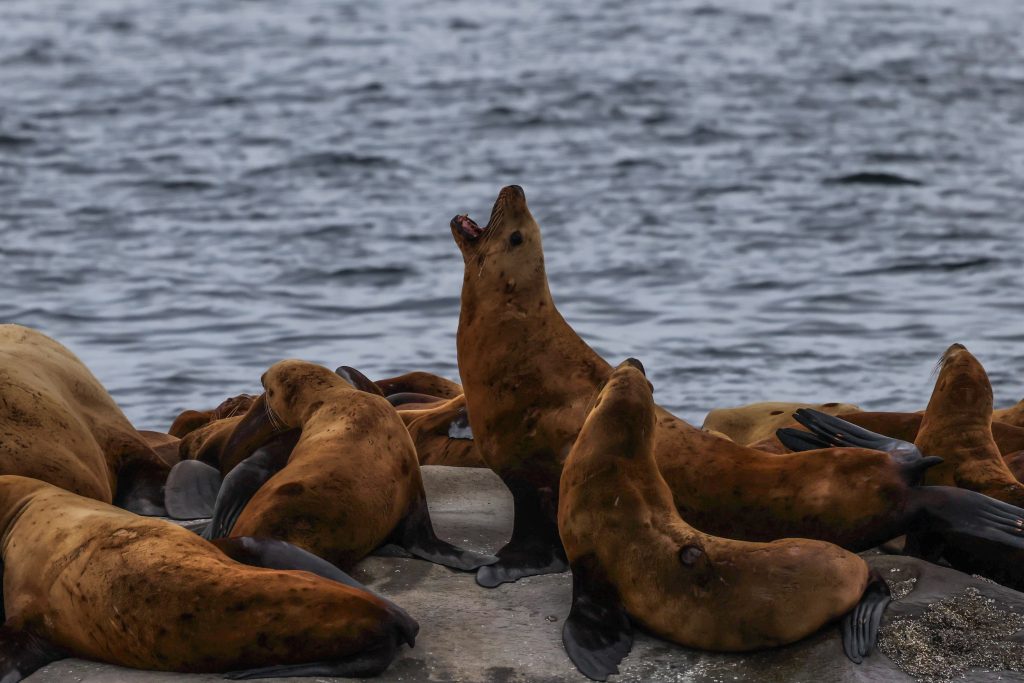
Unlike many marine mammals, Steller sea lions are highly social throughout much of the year. Individuals gather in groups called haul outs, where they rest, socialize, and conserve energy between feeding trips.
These gatherings can range from just a few animals to several hundred, particularly during the late summer and autumn months. While they may appear relaxed, every animal maintains a personal space, and dominance hierarchies are constantly shifting as individuals compete for the best resting spots.
Conservation Success in British Columbia
The eastern population of Steller sea lions represents one of the conservation success stories of the North Pacific. After significant declines during the twentieth century due to hunting and culling, eastern Steller sea lion populations have recovered substantially and are now considered stable or increasing throughout much of their range. Continued protection of breeding sites, healthy fish populations, and responsible wildlife viewing practices all contribute to ensuring future generations can continue to enjoy these remarkable marine mammals!


